Just a year ago, Volkswagen introduced its third generation compact SUV. The Tiguan arrived with a fresh look, taking cues from across the lineup. It also offered more power. Along with a very refined interior.
Then, Volkswagen pulled a huge surprise at this year’s New York International Auto Show. They added an even more powerful version of their turbocharged engine. The increased performance should excite enthusiasts who happen to have a Golf GTI, Golf R or Jetta GLI in their garage.
Adding another engine is just another chapter to the story of the third-generation Tiguan. We have a freshly design SUV to talk about.
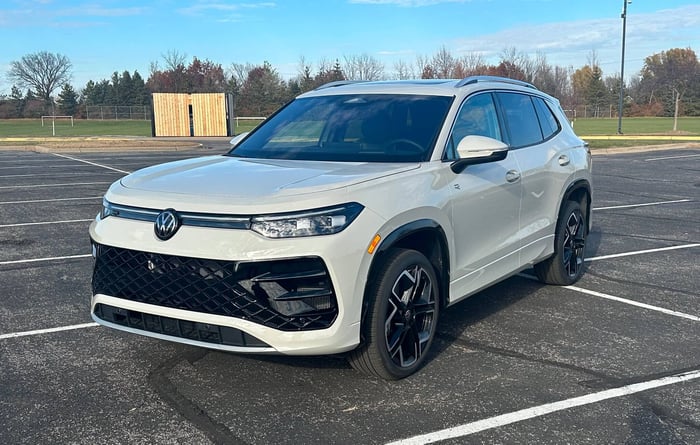
As we mentioned before, the 2026 Tiguan takes its cues from across the Volkswagen lineup. A cleaner upper fascia is dominated by a horizontal LED light bar bridging the two headlamp units. On the bumper is a large lower grille that intakes air into the engine bay. The profile retains a lot of the previous generation’s handsome sloping roofline and glasshouse. Out back is another horizontal LED lighting elements bridging two taillamp units.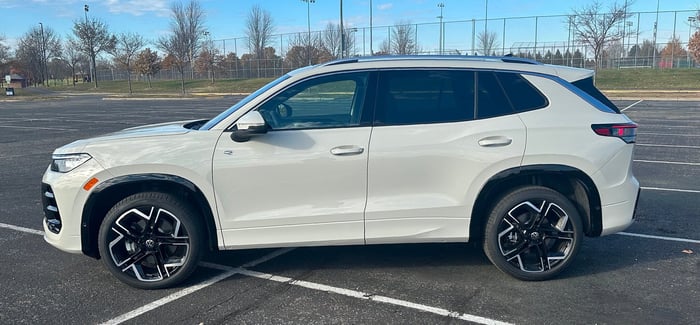
Our SEL R-Line Turbo tester rides on a set of 20-inch alloy wheels on wider tires. A few details and specific badging separate it from the rest of the Tiguan lineup.
The interior is an all-new design for Volkswagen. It starts with a new dashboard design that looks very elevated. The 10.25-inch Digital Cockpit Pro instrument cluster is customizable based on not only the Drive Mode you are, but to the setting in Atmospheres connected through Driving Experience Dial. In the center is a large 15-inch infotainment touchscreen, housing most of the controls for the Volkswagen Tiguan. 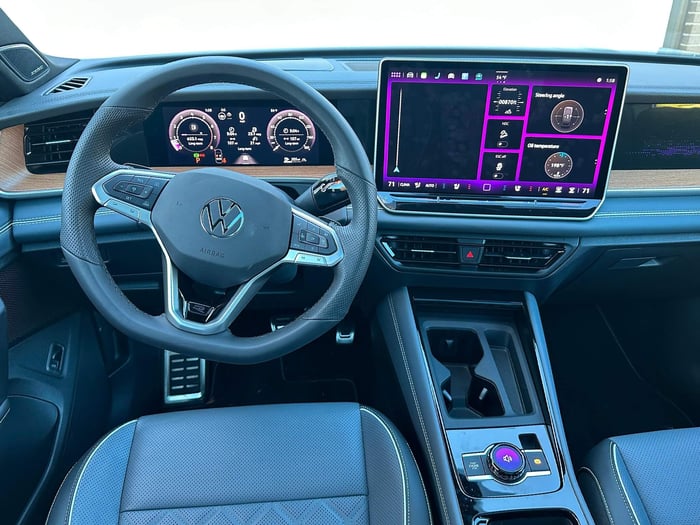
There are a few major changes on this new generation Tiguan compared to previous models. The shifter is now mounted on the steering column. The overall design is now elevated with woodgrain-type trim and cleaner spaces throughout the cabin.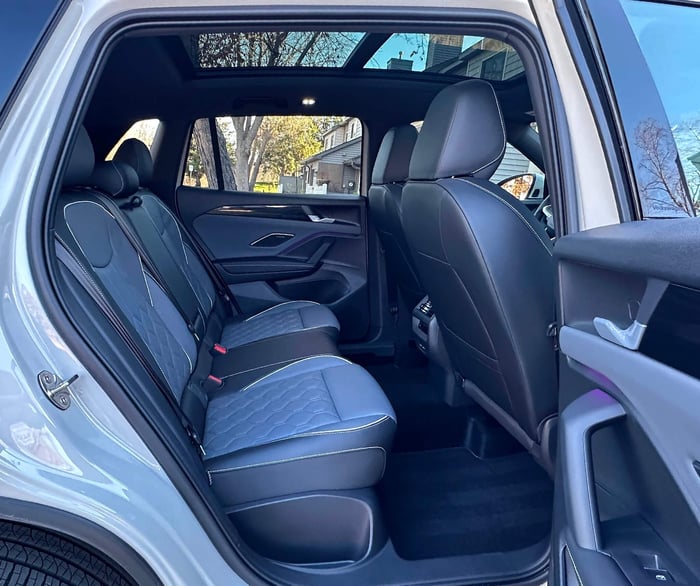
Seating is also elevated, thanks to two-tone black and grigio Varenna leather. The front seats offer a balance of comfort and support, while there is plenty of space and comfort on the second row seats. A third-row option is no longer available on Tiguans here in North America. Cargo space starts with 33.8 cubic feet behind the second row. Folding down the second row of seats will get you up to 69.8 cubic feet available. 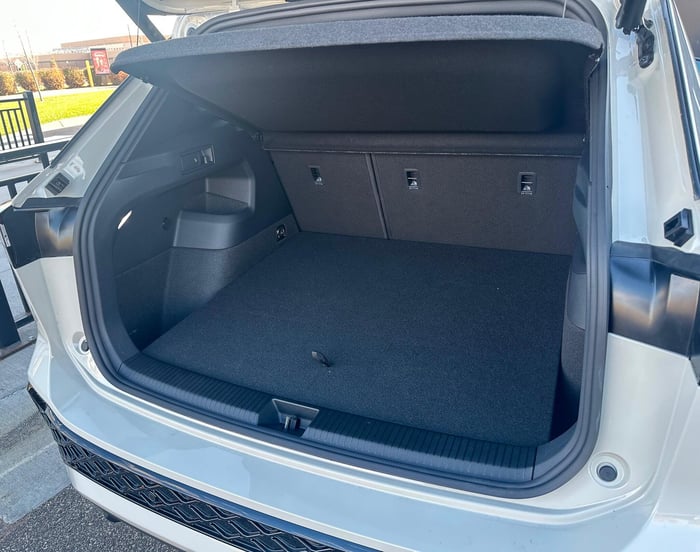
Standard Tiguan models are powered by a 201-horsepower turbocharged 2.0-liter four-cylinder engine. However, our SEL R-Line Turbo tester gets the even more powerful 268-horsepower version of the same engine. It also puts down 258 pound-feet of torque. An eight-speed automatic transmission is connected to either engine, while our tester has the 4Motion all-wheel drive system.
There is no question that this more powerful Turbo engine offered a lot of acceleration. It also cruises very confidently. It may seem that it would be a bit of a handful if the Volkswagen Tiguan is set in Comfort or Eco mode. However, switching the drive mode to Sport changed the entire character of this SUV. In this mode, the entire chassis adjusted to meet the performance of this uprated engine. We’ll explain more in a bit.
In terms of fuel economy, we averaged 23.9 MPG.
Between Comfort, Eco, and Sport modes, we actually have a choice of different driving experiences. In Comfort or Eco mode, the 2026 Tiguan offered a soft, but smooth ride. It does a wonderful job absorbing rougher rad surfaces. Handling was a bit on the soft side, but there’s plenty of control through evasive maneuvers.
Changing into Sport mode tightened up the steering to hunker down the 2026 Volkswagen Tiguan a bit. That included remapping the shift points for a more aggressive drive. The turning radius is decent in any of the modes. As for braking, pedal feel was fine. Response to the wheels were solid, as we the stops in normal and panic situations.
There are four trim levels available on the 2026 Volkswagen Tiguan. Pricing starts at $30,805. Our SEL R-Line Turbo tester came with a sticker price of $44,560.
With competitors replacing higher performance versions of their compact SUVs for electrification, fans of horsepower will find a home at Volkswagen. Yet, the Tiguan still competes in this hotly contested segment that attracts a wide variety of consumers. They will compare the Tiguan to the Toyota RAV4, Nissan Rogue, Hinda CR-V, Subaru Forester, Mazda CX-5, Kia Sportage, Hyundai Tucson, Chevrolet Equinox, GMC Terrain, Ford Bronco Sport, and Jeep Cherokee.
Since this latest generation model arrived a year ago, Volkswagen has been committed to developing its Tiguan into a more competitive vehicle. They have done so by elevating the interior, adding more technology elements, and giving it more power across the board. This would be a good choice for those who rather not have an electrified SUV.