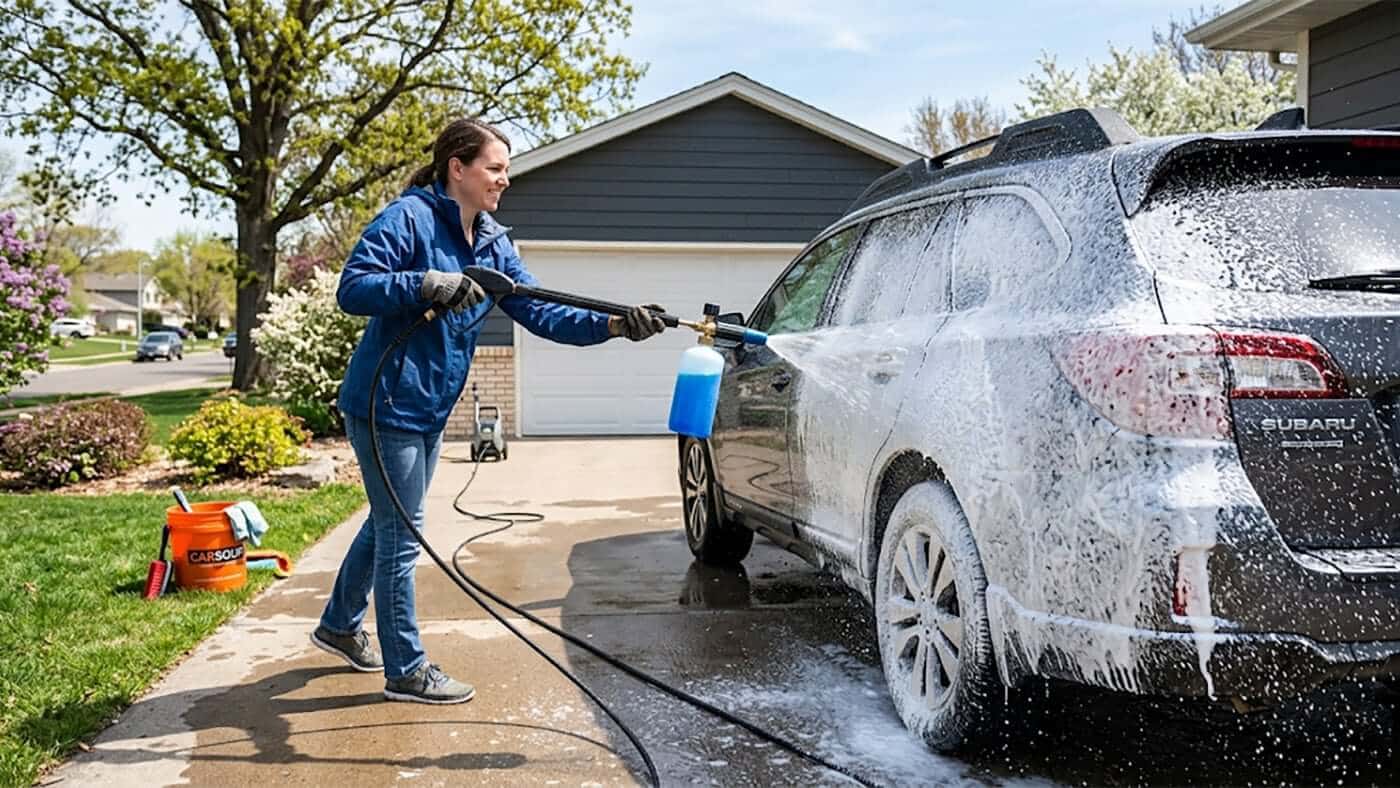
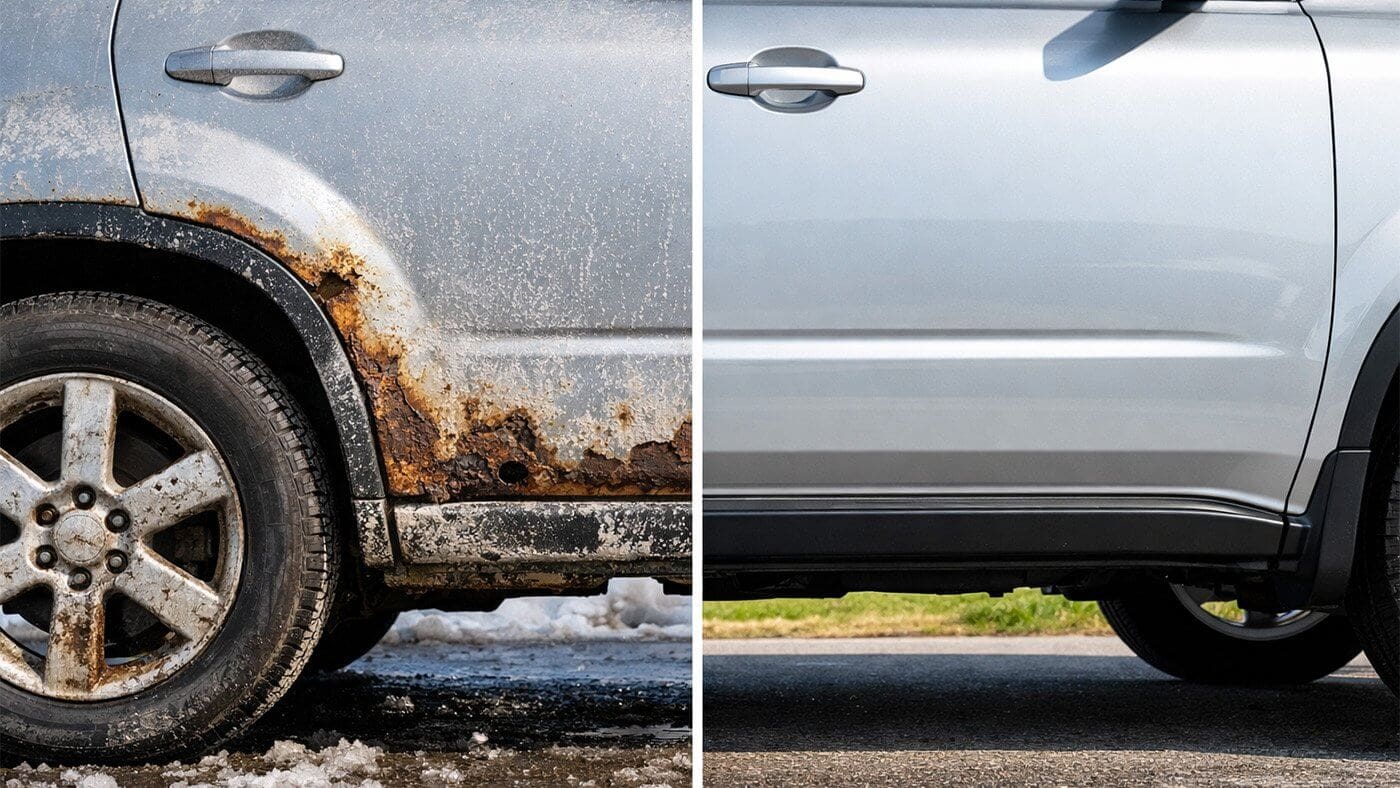

There's a certain relief that comes with the first real warm week of spring — windows down, sun on your arm, the kind of drive that makes you forget the last four months of scraping frost off your windshield at 7 a.m. But while you're enjoying the thaw, something less pleasant is happening underneath your car. All that road salt that kept you from sliding through intersections? It's still there. Packed into your wheel wells. Sitting on your brake lines. Dried into the seams of your frame. And the moment temperatures rise and moisture gets into the mix, the clock on corrosion starts ticking. Spring is the most important time of year for car maintenance — not because of what's coming, but because of what just happened. Here's are some spring car maintenance tips, and what Minnesota drivers need to know.
Table of Contents
The Science of Salt (And Why It's So Damaging)
Minnesota roads get treated with thousands of tons of road salt every winter. It works great for traction, but salt is essentially an accelerant for rust. On its own, iron doesn't rust quickly. But introduce salt and moisture together, and you've created an electrochemical reaction that eats through metal many times faster than normal oxidation.
The problem isn't just the salt itself — it's where it hides. Road salt gets sprayed up into cavities that never fully dry: inside frame rails, behind plastic trim panels, in the folds of your door edges. These are places that see almost zero airflow. Salt sits there, moisture condenses, and the corrosion works from the inside out. By the time you notice a rust bubble on the surface, the damage underneath is usually much worse.
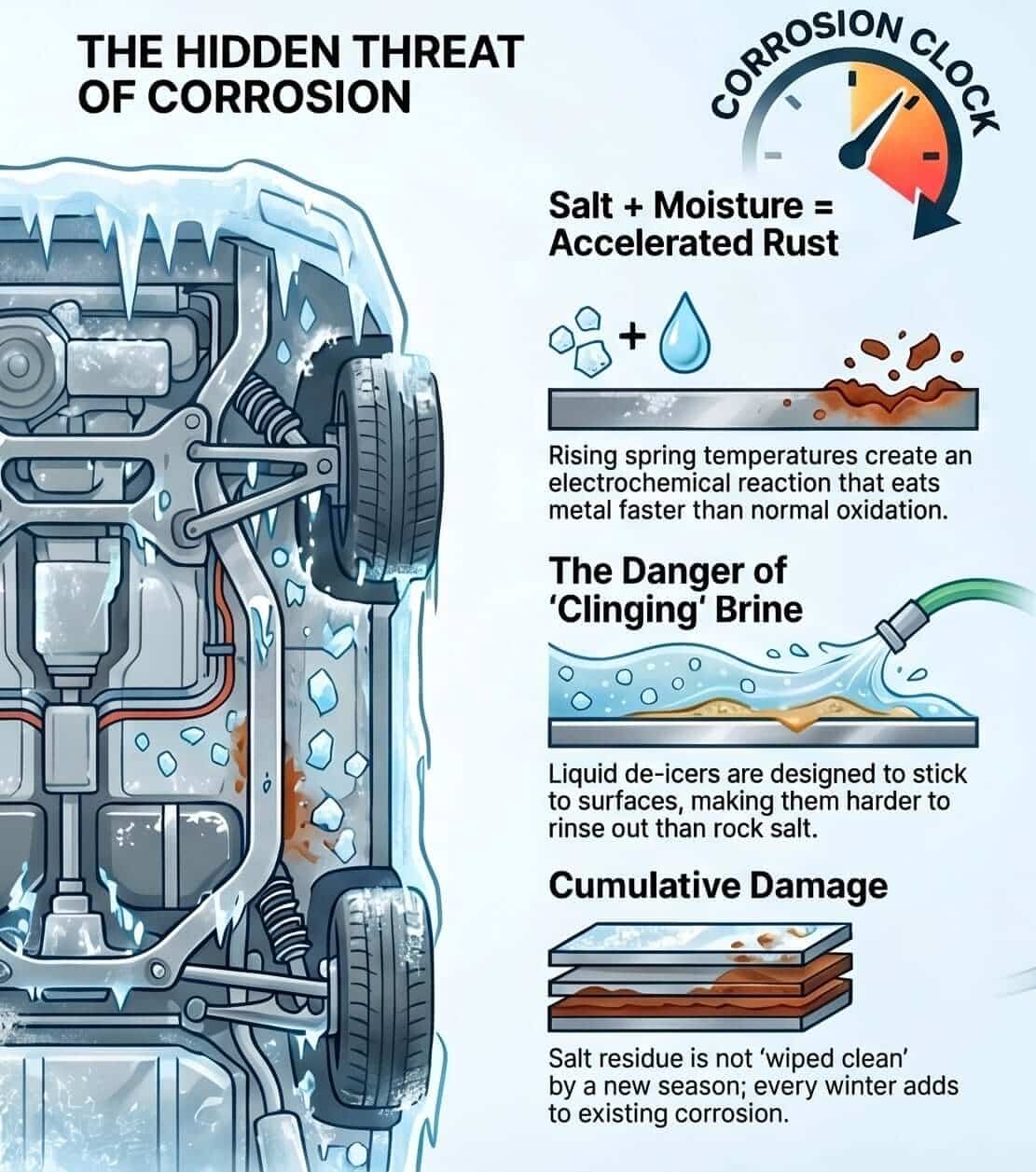
Brine treatments — the liquid de-icers that many municipalities now use instead of dry rock salt — can actually be harder to rinse out than traditional salt because they're designed to cling. If your car was regularly driven on treated roads this winter (and in Minnesota, it was), you should assume there's residue in places you can't easily see.
One more thing worth knowing: road salt damage is cumulative. Your car isn't starting fresh each spring. Every season that goes by without a proper flush adds to what's already there.
Your Spring Cleaning Checklist
The good news is that most salt-related damage is preventable if you act early. Here's a practical checklist to work through once temperatures are consistently above freezing.
✓ Start with a thorough undercarriage wash
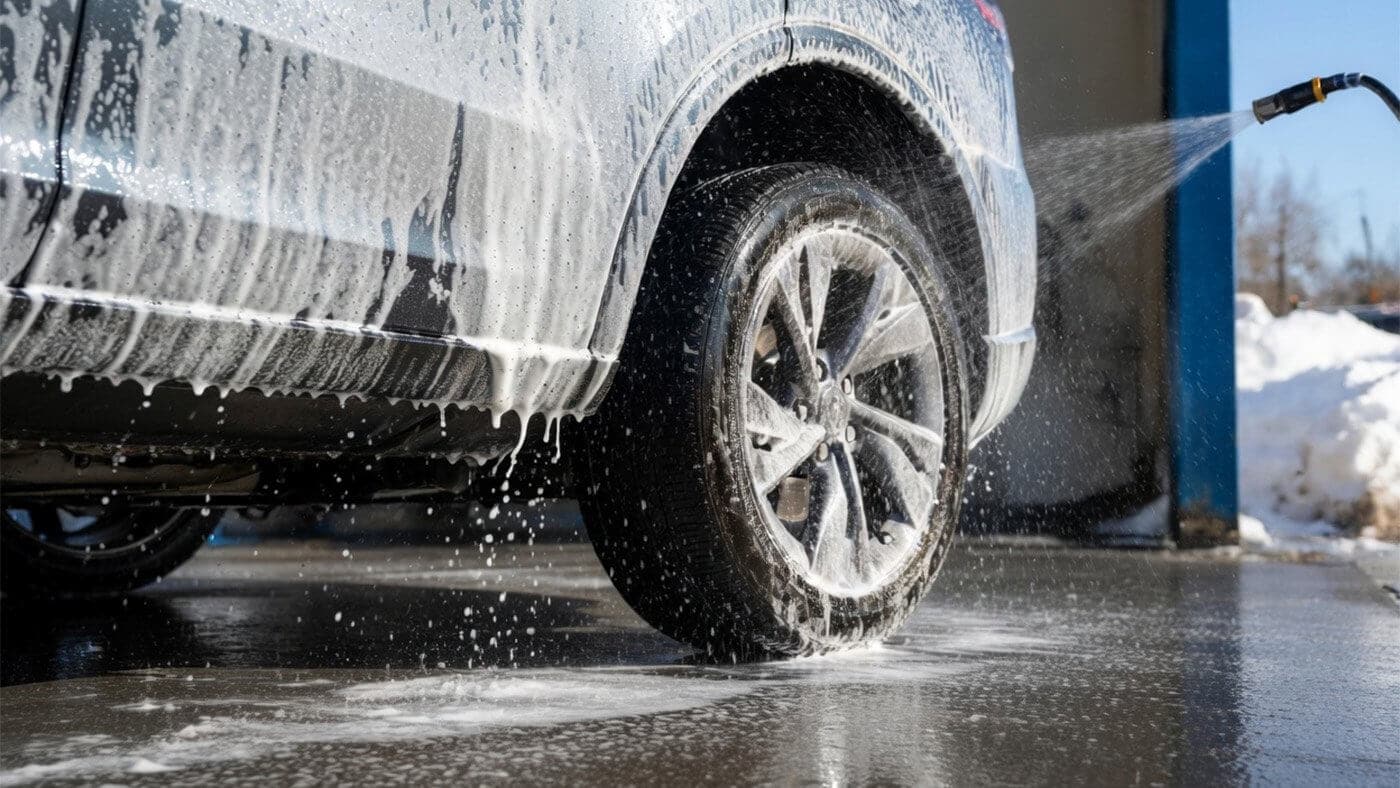
This is the most important step and the one most people skip. A standard car wash won't cut it — you need a pressure washer or a touchless wash with an undercarriage spray cycle. Many full-service car washes offer this as a standard or add-on feature. Get in the wheel wells, around the exhaust, along the frame rails, and behind the bumpers. Repeat this wash two or three times in the first few weeks of spring, not just once. If you want to clean your undercarriage at home, get an undercarriage attachment for your pressure washer that allows to clean underneath your vehicle.
✓ Wash the full exterior, including door jambs and trim edges
Salt gets into every crevice. Pop the doors fully open and wipe down the jamb areas with a damp cloth. Rinse along the window channels, around the fuel door, and under the hood lip. These spots are often overlooked and can trap salt for months.
✓ Dry the car thoroughly — or let it air dry in the sun
Leaving standing water on a car that just had salt rinsed off it can still cause issues. Dry the exterior with a microfiber towel, or at minimum park it in the sun for an hour so moisture doesn't sit in crevices.
✓ Inspect and clear the drainage holes
Most cars have small drainage holes along the bottoms of doors and rocker panels. These are designed to let water out, but they often clog with road debris over winter. Clear them with a thin wire or toothpick so trapped moisture can drain properly.
✓ Reapply wax or paint sealant
Winter strips away whatever protective coating you had. A good carnauba wax or synthetic paint sealant applied in spring gives you a fresh barrier heading into rain season. This isn't just cosmetic — it actively slows the penetration of moisture and contaminants into your clear coat.
✓ Check your floor mats and interior for moisture damage
Salt and slush get tracked inside too. If your carpet has been wet all winter under rubber mats, there may be moisture sitting underneath. Pull the mats out, let everything dry, and look for any signs of mold or mildew on the carpet beneath.
Recommended Resource
Protect Your Vehicle Before Next Winter
If you're serious about rust prevention, a professional undercoating or rustproofing treatment is one of the highest-value things you can do for a Minnesota vehicle. P&L Automotive, based in the Twin Cities, offers a full range of vehicle protection packages — including undercoating with a 10-year warranty, rustproofing, ceramic paint sealant, Paint Protection Film (PPF), and the Final Coat electromagnetic rust protection system.
View Protection Packages at P&L Automotive →Inspecting for Rust and Salt Damage
Once the car is clean, you're in a much better position to see what you're actually dealing with. Here's how to do a basic damage inspection — no mechanic required.
Get underneath (safely)
You don't need a lift, but you do need to see the underside. Use a flashlight and get low. You're looking for three things: surface rust (reddish-brown discoloration on bare metal), scale rust (flaking, rough texture), and penetrating rust (deep pitting or holes). Surface rust is normal and manageable. The other two need attention.
Focus on the high-risk areas
The most vulnerable spots on a Minnesota car are the frame rails, subframe mounting points, brake lines, fuel lines, and suspension components. These are areas where moisture pools and where structural integrity actually matters. Also check the bottoms of your doors and the rocker panels, which are common failure points on high-mileage vehicles that have spent years on salted roads.
Check your brake lines specifically
This is worth emphasizing. Brake line corrosion is one of the more serious consequences of long-term salt exposure, and it's not always obvious until there's a problem. If your lines look flaky, pitted, or show any signs of weeping, have a shop look at them before summer driving season begins.
Look for bubbling or blistering paint
Paint that's starting to bubble — especially low on the doors, at the wheel arches, or along the rocker panels — is a sign that rust is forming beneath the surface. This is best caught early. A body shop can grind out the rust and treat it before it spreads; once it gets into the structural metal, it becomes a much bigger repair.
Listen and feel when you drive
After your spring wash, pay attention to any new sounds: clunking over bumps, grinding during turns, or vibration at speed. These can sometimes indicate corrosion-related wear on suspension components, wheel bearings, or brake hardware that salt damage has accelerated.
Long-Term Protection: Getting Ahead of Next Winter
Spring is also the right time to think about protection, not just cleanup. A few investments now can meaningfully extend the life of your vehicle.
Consider professional undercoating or rust inhibitor treatment
Products like Fluid Film, Krown, or NH Oil Undercoating are sprayed into the cavities of your frame, door interiors, and undercarriage. They displace moisture and form a barrier against corrosion. This isn't marketing fluff — these treatments have real documented effects, and many longtime Minnesota car owners get them applied annually. Spring and fall are the best times to schedule them.
Touch up paint chips and scratches now
Every chip in your paint is a future rust entry point. Touch-up paint is inexpensive and easy to apply. You don't need a perfect result — the goal is to seal bare metal before next winter hits.
Flush your coolant if it's overdue
Coolant doesn't have an obvious connection to salt damage, but degraded coolant can become slightly acidic and cause internal corrosion on aluminum engine components. If you haven't flushed it in the last few years, spring is a good time to check the service interval.
Consider a ceramic coating for longer-term paint protection
If you're planning to keep your vehicle for several more years, ceramic coating applied by a professional detailer provides a much more durable protective layer than wax. It's an investment upfront, but it significantly reduces the seasonal maintenance your paint requires and stands up better to road film and salt spray.
Garage your car when you can
This one sounds simple, but it matters. Cars that are garaged in winter are exposed to far less salt accumulation than cars parked outside. If you have access to covered parking — even part-time — it makes a difference over the life of the vehicle.
Protecting Your Investment
Your car is likely one of the largest financial investments you own. Minnesota winters are hard on vehicles — there's no way around it — but the damage they do isn't inevitable. Most rust and salt damage is preventable with consistent attention at the right times of year.
Spring isn't just about enjoying better weather. It's a window — a few weeks where you can get ahead of corrosion before it becomes something costly. A thorough wash, a careful inspection, and a few targeted maintenance steps now can add years to the life of your vehicle. Follow our spring car maintenance tips and you'll be ahead of the game.
If you're shopping for a used car, this is also a useful lens to apply when evaluating vehicles. A car that's been garaged, regularly washed, and treated for rust will hold up far better over time than one that hasn't — regardless of mileage. Look at the undercarriage. Check the rocker panels. The signs are usually there if you know what to look for.
Drive safely this spring.
Car so rusty it's beyond repair? Find your new car on CarSoup!
- Looking for some car washing tips? Check out our article about how to wash your car at home for the best clean.
FAQs
How often should I wash my car's undercarriage in winter to prevent rust?
Ideally, you should get an undercarriage wash every one to two weeks during heavy salt season — typically January through early March in Minnesota. After each significant snowstorm or road-salting event, try to rinse within a day or two before the salt dries and bonds more firmly. At minimum, aim for once a month. More frequent washing is one of the most cost-effective things you can do to slow rust formation.
Can I remove road salt damage myself, or do I need a professional?
It depends on how far the damage has progressed. Surface rust — the early reddish discoloration on bare metal — can often be addressed with rust converter products, a wire brush, and touch-up paint. But once rust has started blistering your paint, pitting deeply into metal, or affecting structural components like frame rails or brake lines, you really need a professional. Body shops and rust specialists have the equipment to grind, treat, and seal damage properly. Attempting a DIY fix on structural rust can give you a false sense of security while the problem continues underneath.
Is undercoating worth the cost in Minnesota?
For most Minnesota drivers, yes — particularly if you plan to keep the vehicle for more than three or four years. Annual treatments with penetrating rust inhibitors like Fluid Film or Krown typically run $100–$175 and are effective at protecting the cavities that are hardest to wash. Compared to the cost of rust repair or a premature vehicle replacement, it's a very reasonable investment. Many longtime Minnesota car owners treat it like an oil change — just something you do every year.
What's the difference between surface rust and structural rust?
Surface rust is oxidation that's limited to the outermost layer of metal. It looks bad and will eventually progress, but caught early it can be treated and painted over without affecting the integrity of the part. Structural rust has penetrated deeper into the metal, causing pitting, flaking, or perforation. When structural rust affects load-bearing components — frame rails, subframe mounts, suspension attachment points — it becomes a safety issue, not just a cosmetic one. Structural rust on critical components can be very expensive to repair correctly and may disqualify a vehicle from passing inspection.
My car has rust spots already. Is it too late to do anything?
Not at all, unless the damage is truly advanced. The goal shifts from prevention to containment and repair. Have a body shop or rust specialist assess the affected areas. For surface and early penetrating rust on body panels, grinding, rust converter treatment, primer, and paint can stop the progression effectively. For undercarriage rust, protective coatings applied over treated metal can slow further corrosion significantly. The key is acting now rather than letting another winter accelerate the damage.
Should I buy a car that already has some rust on the undercarriage?
It depends on where the rust is and how severe it is. Some surface rust on non-structural parts — heat shields, exhaust hangers, minor body panels — is normal on any older Minnesota vehicle and isn't necessarily a deal-breaker. What you want to avoid is rust on the frame, subframe, floor pans, brake lines, or suspension mounts. If you're considering a used car with visible undercarriage rust, bring a trusted mechanic along or pay for a pre-purchase inspection. A $100–$150 inspection fee can save you from buying someone else's problem.