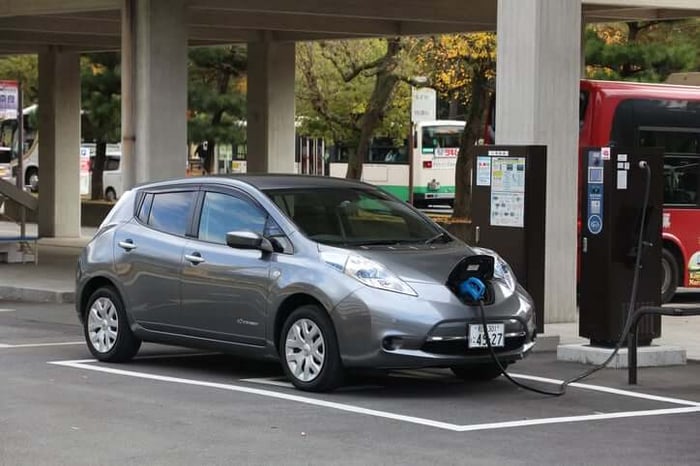
The Nissan Leaf, a pioneer in the mass-market electric vehicle segment, faces a pivotal moment. As the automotive world rapidly electrifies, the 2025 model year presents a crucial opportunity for Nissan to revitalize its iconic EV and solidify its position in a fiercely competitive market. While concrete details are still emerging, analyzing current trends and Nissan's strategic direction allows us to anticipate what the Leaf 2025 might offer.
The original Leaf, launched in 2010, democratized electric driving, proving that EVs could be practical and accessible. However, subsequent generations have struggled to maintain their initial dominance, facing challenges from newer, more technologically advanced competitors. Therefore, the 2025 Leaf must address key areas to remain relevant: range, technology, and design.
Range and Battery Technology: Addressing Range Anxiety
One of the most pressing concerns for potential EV buyers is range anxiety. The current Leaf offers respectable range figures, but they fall short compared to many newer models. For the 2025 iteration, Nissan is expected to focus on significant improvements in battery technology. This could involve:
Increased Energy Density: Utilizing next-generation battery chemistries to boost the energy capacity of the battery pack without significantly increasing its size or weight. Solid-state batteries, while still in development, represent a potential long-term solution, and Nissan is investing heavily in this technology. While full solid-state may be to early for 2025, improvements to current lithium ion technology are expected.
Enhanced Battery Management System: Optimizing the battery management system to improve charging efficiency and overall range. This includes more precise temperature control and improved algorithms for estimating remaining range.
Larger Battery Options: Potentially offering multiple battery pack sizes to cater to different customer needs, allowing for a balance between affordability and extended range.
These enhancements are crucial for the Leaf to compete with EVs offering ranges exceeding 300 miles.
Technology and Connectivity: Staying Ahead of the Curve
In today's digital age, advanced technology and seamless connectivity are essential. The 2025 Leaf must incorporate cutting-edge features to attract tech-savvy consumers:
Upgraded Infotainment System: A larger, more responsive touchscreen display with improved graphics and user interface. Wireless Apple CarPlay and Android Auto compatibility should be standard.
Advanced Driver-Assistance Systems (ADAS): Expanding the capabilities of Nissan's ProPILOT Assist system, including enhanced lane-keeping assist, adaptive cruise control, and potentially, hands-free driving in certain conditions.
Over-the-Air (OTA) Updates: Enabling seamless software updates to improve vehicle performance, add new features, and address potential issues remotely.
Enhanced Connectivity Features: Integrating features like vehicle-to-grid (V2G) and vehicle-to-load (V2L) capabilities, allowing the Leaf to power homes or other devices.
These technological advancements will not only enhance the driving experience but also position the Leaf as a technologically advanced and future-proof vehicle.
Design and Styling: A Fresh and Modern Approach
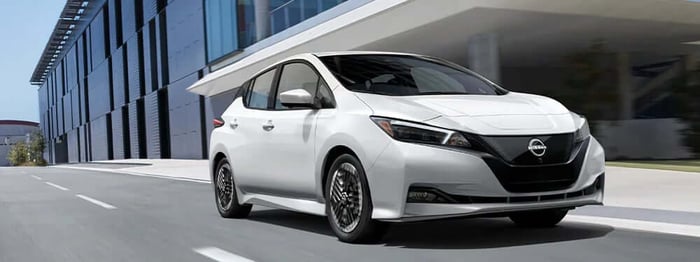
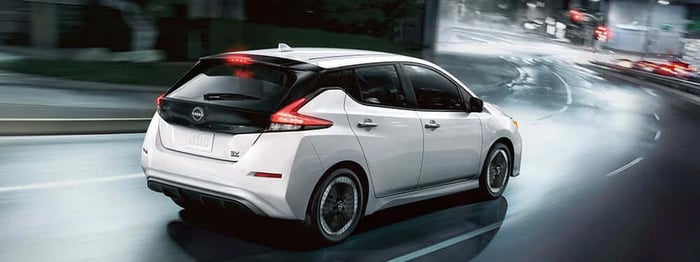
The Leaf's design has evolved over the years, but the 2025 model needs a more dramatic refresh to stand out in a crowded market. Nissan needs to embrace a more modern and dynamic design language, incorporating:
Sleeker Aerodynamics: Optimizing the exterior design for improved aerodynamics to reduce drag and enhance efficiency. This could involve a lower profile, smoother surfaces, and a redesigned front fascia.
Modern Interior Design: Creating a more spacious and comfortable cabin with premium materials and a minimalist aesthetic. A focus on sustainable materials would also align with the Leaf's eco-friendly image.
Distinctive Lighting Signature: Incorporating distinctive LED headlights and taillights to create a unique visual identity.
Potential Crossover Styling: With the popularity of Crossovers and SUV's, there is a strong possibility that the Nissan Leaf will take on a more Crossover inspired design.
A fresh and modern design will not only enhance the Leaf's visual appeal but also attract a wider range of customers.
The Future of the Leaf: Navigating the Changing Landscape
The 2025 Nissan Leaf faces a challenging but exciting future. To succeed, Nissan must demonstrate its commitment to innovation and address the evolving needs of EV consumers. By focusing on range, technology, and design, Nissan can revitalize the Leaf and reclaim its position as a leader in the electric vehicle market.
The success of the 2025 Leaf will depend on Nissan's ability to deliver a compelling package that balances affordability, performance, and technology. As the EV market continues to grow, the Leaf has the potential to play a significant role in shaping the future of electric mobility.