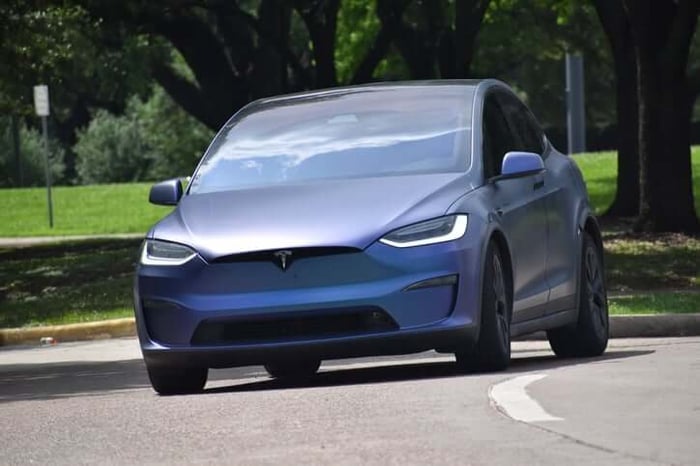
The Tesla Model X, a pioneer in the luxury electric SUV segment, has consistently pushed boundaries with its falcon-wing doors, expansive panoramic windshield, and cutting-edge technology. As we look towards the 2025 model year, expectations are high for further refinements and enhancements to this iconic vehicle. While a radical redesign isn't anticipated, Tesla's iterative approach promises a Model X that's even more refined, efficient, and technologically advanced.

Refining the Existing Formula:
The core design of the Model X, with its instantly recognizable silhouette and distinctive doors, is unlikely to undergo a dramatic overhaul. Instead, Tesla is expected to focus on subtle exterior tweaks. This could include updated front and rear fascias, revised lighting elements, and potentially new wheel designs, all aimed at enhancing aerodynamics and visual appeal.
Inside, the focus will likely remain on minimalism and functionality. Expect further refinements to the yoke steering wheel, potentially with haptic feedback improvements or a more traditional wheel option. The central 17-inch touchscreen, the heart of the Model X's infotainment system, will likely see continued software updates and potentially hardware upgrades for faster processing and improved graphics. Material quality and fit-and-finish, areas where Tesla has been continuously improving, are also expected to receive attention.

Power and Performance: Efficiency Takes Center Stage:
The Tesla Model X has always been a performance powerhouse, and the 2025 model is expected to build upon that legacy. While significant power increases are less likely, Tesla is expected to prioritize efficiency improvements. This could involve advancements in battery technology, drive unit optimization, and thermal management.
Rumors suggest that Tesla may incorporate its next-generation 4680 battery cells, which offer higher energy density and improved efficiency. If implemented, these cells could translate to increased range and faster charging times. However, widespread availability of 4680 cells remains a key factor.
Improvements in the vehicle's heat pump system are also expected, further optimizing energy usage in various climate conditions. This focus on efficiency aligns with the broader industry trend towards sustainable mobility and maximizing range.
Technological Advancements: Autonomy and Connectivity:
Tesla's Full Self-Driving (FSD) capability remains a central focus, and the 2025 Tesla Model X will undoubtedly feature the latest iterations of this technology. While true Level 5 autonomy remains elusive, continuous software updates and hardware improvements, such as enhanced camera and sensor suites, will contribute to a more refined and capable FSD experience.
Connectivity will also play a crucial role. Expect seamless integration with Tesla's mobile app, over-the-air software updates, and an enhanced suite of entertainment and productivity features. The possibility of Starlink satellite internet integration, offering faster and more reliable connectivity in remote areas, is also a potential feature.
Addressing Existing Concerns and Enhancing Comfort:
Tesla is likely to address some of the criticisms leveled at previous Model X models. Improvements in ride quality, noise insulation, and seat comfort are expected. The falcon-wing doors, while iconic, have sometimes been a source of concern regarding reliability and functionality in tight spaces. Tesla may implement further refinements to the door mechanisms and sensors to enhance their performance.
The Supercharger network, a significant advantage for Tesla owners, will continue to expand and improve. Faster charging speeds and increased availability of charging stations will further enhance the Model X's usability for long-distance travel.

Market Positioning and Competition:
The luxury electric SUV segment is becoming increasingly competitive, with established automakers and new entrants vying for market share. The 2025 Model X will need to maintain its edge by offering a compelling combination of performance, technology, and luxury.
Tesla's focus on efficiency, technology, and continuous improvement will be crucial in differentiating the Model X from its competitors. The Supercharger network, FSD capabilities, and over-the-air software updates remain significant advantages.
The Future of the Model X:
The 2025 Tesla Model X is expected to be an evolution of the existing model, focusing on refinements and enhancements rather than a radical redesign. Tesla's iterative approach, combined with its focus on technological innovation and efficiency, will ensure that the Model X remains a leading contender in the luxury electric SUV segment.
While a complete overhaul might be on the horizon for future model years, the 2025 iteration will likely solidify the Model X's position as a technologically advanced, high-performance, and luxurious electric SUV. By prioritizing efficiency, enhancing comfort, and refining existing technologies, Tesla aims to deliver a Model X that continues to electrify the automotive world. The focus will be on making the existing platform more efficient, more reliable, and more user friendly. This measured approach allows Tesla to continue its pattern of refining its vehicles through real world data and customer feedback, creating a better product over time.