
Whiteouts, Ice, And Deer: Why A Smart Co-Pilot Helps
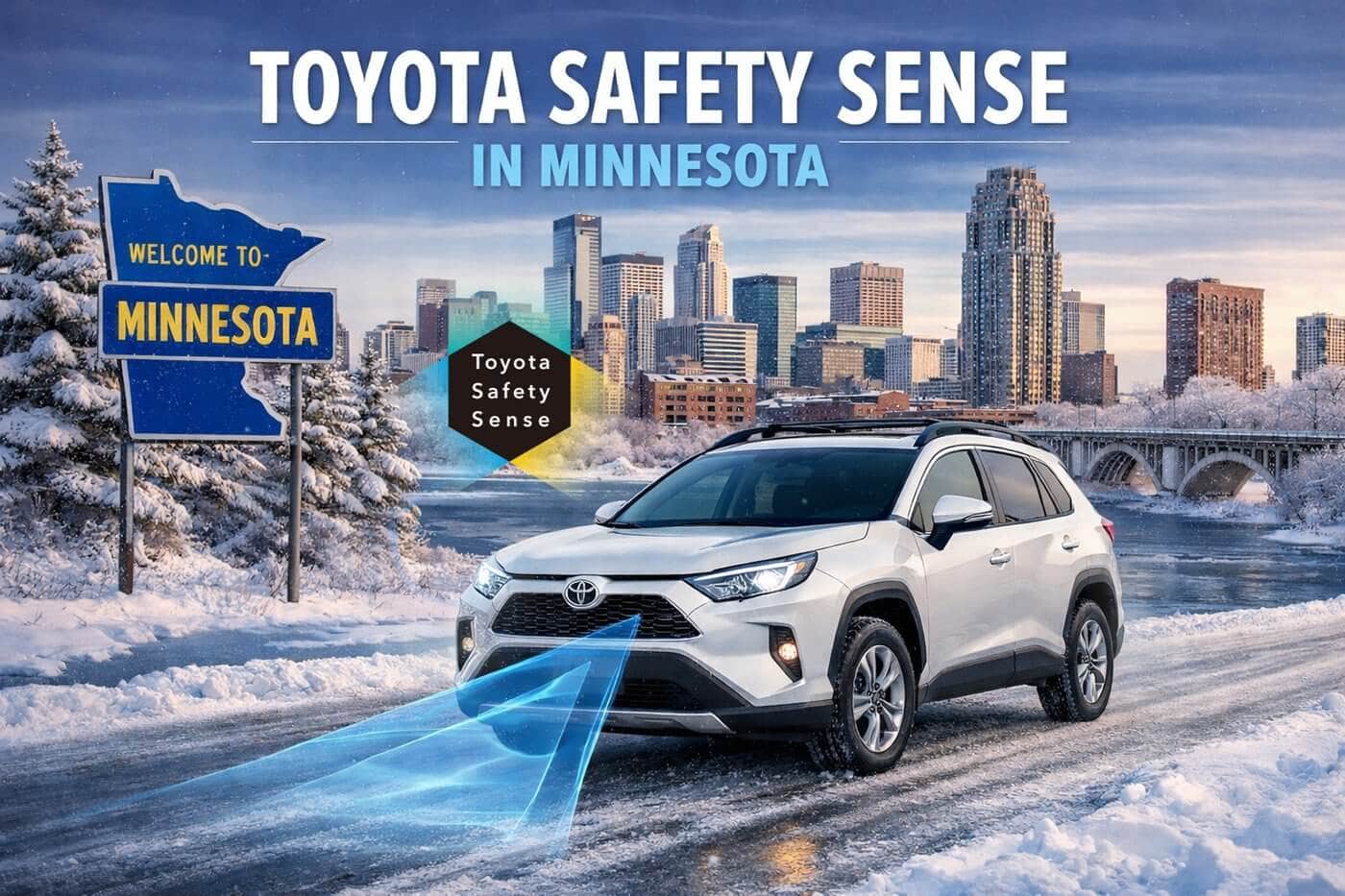
Snow squall slams I-94 near St. Cloud. Slush ridges grab at your tires, taillights bloom red three cars ahead. You weigh brake, coast, or swerve in half a second, while ice needs three times the distance to stop you. Heart spikes. Hands tighten. Visibility flickers like a light switch. One gust erases lane lines; a passing semi throws a white curtain across your hood. Your wipers chatter, anti-lock brakes (ABS) pulse, and the shoulder disappears under windrows. In moments, conditions jump from damp to glare ice. Decisions get hard. Fast. So what helps in that gap? In this guide, we break down Toyota Safety Sense in Minnesota in plain English—how it behaves in Minnesota winter, what each version adds, and how to shop and test the right Toyota locally, with smart filters and Soupy AI help.
Table of Contents
- Whiteouts, Ice, And Deer: Why A Smart Co-Pilot Helps
- What Tss Is—And Why It Matters In Minnesota
- Minnesota Hazards Are Real—But You Can Stack The Odds
- Why Modern Minnesota Driving Needs Active Safety On Standby
- TSS Features That Earn Their Keep In Minnesota Winter
- Pre-Collision System with Pedestrian Detection (PCS w/PD):
- Dynamic Radar Cruise Control (DRCC):
- Lane Departure Alert with Steering Assist (LDA w/SA):
- Lane Tracing Assist (LTA):
- Road Sign Assist (RSA):
- Automatic High Beams (AHB):
- Proactive Driving Assist (PDA, TSS 3.0+):
- Emergency Steering Assist (where equipped):
- Compare Toyota Safety Sense Versions At A Glance
- Clean Sensors, Engaged Driver: TSS In Minnesota Moments
- Winter TSS Playbook For Minnesota Driving
- Shop Smarter: Trims, Years, Real Listings
- Tss Vs Honda Sensing And Tesla: Winter-Ready Differences
- Suv, Sedan, Or Pickup: Minnesota’s Right Fit
- A Safe Minnesota Test-Drive Plan To Feel Tss Working
- Minnesota Tss Faqs: Winter, Sensors, Safety Limits
- Minnesota Drivers: Find Winter-Ready Toyotas With Tss
- FAQs
What Tss Is—And Why It Matters In Minnesota
Since we just promised plain English, here’s what Toyota Safety Sense (TSS) actually is: a bundle of driver-assist features that help you avoid or lessen crashes—forward collision warning with automatic braking, lane alerts/assist, adaptive cruise that matches traffic, and automatic high beams. It’s an extra set of eyes and gentle hands. You’re still the driver; TSS supports your focus, spacing, and speed.
TSS uses a forward camera (near the rearview mirror) and radar (often behind the Toyota emblem) plus software to spot vehicles, lane lines, and signs. When it sees risk, it warns, nudges steering, or applies the brakes. Snow or grime can limit detection, so clean sensors and your judgment still rule. You decide, it assists.
On Twin Cities commutes that stretch 45–60 minutes, adaptive cruise reduces fatigue. Crosswinds south of Rochester and lake-effect bursts toward Duluth challenge lane keeping; alerts help you course-correct. Near Elk River, pre-collision braking can trim stopping distance if a deer darts out. And during pothole season, steady lane guidance keeps you centered.
And if you’re shopping beyond Minnesota, we’ve got you covered. You can just as easily browse cars for sale in Ashburn, VA, then filter for the TSS version you want.
Minnesota Hazards Are Real—But You Can Stack The Odds
Black ice forms first on bridges, stealing grip without warning. Deer jump from ditches in a blink near dusk. Blowing snow hides lane lines; fresh snow glare at 3 p.m. can blind you like high beams. I‑35W stop-and-go compresses gaps to car-lengths. At night on two-lanes, curves and dark coats hide hazards. Reaction time shrinks.
South of Rochester, Highway 52 crosswinds shove you a half‑lane after each passing semi. The I‑94/I‑494 ramps stack three decisions in five seconds at rush hour. Salt spray, slush, and road film coat windshields and front emblems, dulling visibility. In neighborhoods, plow berms narrow lanes and hide pedestrians. Downtown Minneapolis, buses and delivery vans pop from alleys. It’s a lot.
Airbags and crumple zones protect you after impact. Active safety aims to help you avoid that impact in the first place. Long winter drives breed fatigue; whiteout stress narrows vision; a ping from your phone steals two seconds. In those moments, alerts, automatic braking, and lane support can buy space and time—but they still need you engaged.
Advanced driver‑assistance systems (ADAS) are helpers, not chauffeurs. TSS won’t see through slush on the front emblem or ice on the windshield camera, and it won’t steer you out of every surprise. You can and should override anytime. Hands on wheel, eyes up, feet ready—technology backs you up, it doesn’t take over.
Why Modern Minnesota Driving Needs Active Safety On Standby
Dense Twin Cities traffic and knotty interchanges like I‑94/I‑494 demand split‑second choices while weather flips from wet to ice in minutes. Human reaction averages about 1.5 seconds; at 60 mph, that’s 132 feet. Active systems can warn and slow sooner, but only if their eyes are clear. Winter grime films the windshield camera and packs the grille radar. A quick wipe of the glass area and emblem before you drive keeps detection sharp when you need it most.
Visibility isn’t just distance; it’s deciphering cues. Salt fades lane paint by February, snow fills ruts, and dusk comes early, stacking glare with headlight halos from wet roads. After 40 minutes in traffic, your brain starts filtering out details to cope. That’s when a lane departure chime or a gentle steering cue can snap attention back. Used wisely, these nudges reduce mental load so you can concentrate on the big calls—speed, spacing, and where the road actually goes.
So how do you turn all this into safer miles? Toyota’s TSS keeps watch, maintains gaps, and steadies lanes—while you stay in charge. Next up, the specific features that earn their keep in Minnesota, plus when to trust them and when to take over.
TSS Features That Earn Their Keep In Minnesota Winter
You asked how to turn winter miles safer—here’s the short list. We’ll translate each TSS feature in plain English, tie it to a Minnesota scenario, and note trust-vs-take-over moments; versions differ, and we’ll decode them next.
Pre-Collision System with Pedestrian Detection (PCS w/PD):
Alerts and brakes for cars or people in low traction; slush on the grille or iced camera can limit detection—be ready to steer.
Dynamic Radar Cruise Control (DRCC):
Maintains distance on I‑94 and I‑35, easing stop‑and‑go. Newer full‑speed versions handle down to zero; you still widen gaps and re‑engage carefully on slick days.
Lane Departure Alert with Steering Assist (LDA w/SA):
Gentle nudges if you drift when blowing snow narrows lanes; may mute when lines vanish. Hands on, pick the safest lane position.
Lane Tracing Assist (LTA):
Helps center your lane during Twin Cities commutes; hands must stay on the wheel. If snow hides lines, expect disengagement and steer manually.
Road Sign Assist (RSA):
Reads speed, stop, and yield signs to remind you; snow, glare, or bent signs can be missed. Use it as a nudge, not your only reference.
Automatic High Beams (AHB):
Boosts visibility on rural stretches toward Brainerd, then dims for oncoming traffic. Snow glare and reflections can trick it—know the stalk toggle to take control politely.
Proactive Driving Assist (PDA, TSS 3.0+):
Gentle steering and smooth deceleration around curves or slower cars in St. Paul. Light touch; keep hands on and be ready in slick spots.
Emergency Steering Assist (where equipped):
Adds controlled steering support to help dodge a sudden obstacle, like a deer or stalled car. Availability varies by model/year; you still steer decisively.
Compare Toyota Safety Sense Versions At A Glance
Since availability varies by model and year, here’s the clean map. Which version gets you the features you actually want? Capability grows each generation and by trim. Sensors and camera placement—and even calibration after windshield work—can change by model year, so double-check listings or ask Soupy AI. Next, see how they behave in Minnesota.
TSS Version | Key features included | Typical model years | Highway capability | Notes for MN driving |
TSS 1.0 | PCS, LDA, AHB (no LTA) | ~2016–2018 | Basic DRCC, often not full-speed | Solid baseline; mind winter sensor cleaning |
TSS 2.0 | Adds RSA; improved DRCC | ~2018–2020 | Better stop-and-go | Helpful in metro congestion; still watch lane markings |
TSS 2.5 | Refinements to PCS/LTA; curve speed management | ~2020–2021 | Smoother centering, calmer curves | Noticeably calmer on I-35E; still hands-on |
TSS 2.5+ | Adds ESA (select models) | ~2021–2022 | More confident merging and cut-in response | Useful for evasive moves on slick surfaces |
TSS 3.0 | Adds PDA; broader camera/radar upgrades | ~2023+ | Strong full-speed DRCC | Best for winter adaptability; sensor care still critical |
Clean Sensors, Engaged Driver: TSS In Minnesota Moments
Sensor care still matters—and so does you staying engaged. With clean cameras, clear radar, and hands on the wheel, here’s how we watch Toyota Safety Sense (TSS) play out in Minnesota moments to stack the odds.
I‑94 whiteout: Dynamic Radar Cruise Control (DRCC) and Lane Tracing Assist (LTA) hold gaps and guidance; Automatic High Beams (AHB) boost visibility. You widen gaps, slow early, and steer smoothly.
Rural two‑lane, 10 p.m.: Automatic High Beams (AHB) light shoulders; Pre‑Collision System (PCS) may brake for a surprise. You keep speed conservative, scan edges, and cover the brake.
Twin Cities construction: Lane Departure Alert (LDA) nudges edges; Road Sign Assist (RSA) flags temporary limits. You trace cones deliberately, ignore faded paint, and prioritize human judgment.
Bridge icing near Duluth: Raise DRCC following distance, add space, and stay gentle on throttle. PCS can reduce severity, but physics win—prepare to brake straight.
Stop‑and‑go on I‑35W: Full‑speed DRCC eases crawling traffic. Eyes up for cut‑ins; after longer stops, be ready to re‑engage and roll smoothly. Clean sensors keep it reliable.
Winter TSS Playbook For Minnesota Driving
Clean sensors keep it reliable, so here’s the quick routine we give Minnesota owners to keep Toyota Safety Sense sharp, alerts meaningful, and winter stress lower—without adding time to mornings.
Keep cameras and radars clear: Gently remove packed snow and salt from the grille emblem, bumper radar, and windshield camera area.
Mind windshield repairs: After replacement, ask for ADAS (advanced driver-assistance systems) camera calibration to restore proper aim and lane/traffic detection.
Choose winter tires: Extra grip lets ADAS work sooner and smoother; mount and rotate before first freeze for predictable stopping and steering.
Know when to pause features: Disable AHB (Automatic High Beams) and LTA (Lane Tracing Assist) if glare or missing lines trigger cues.
Update software: Ask your dealer about TSS firmware updates and recalls; they can refine detection and behavior—easy to add during routine service.
Practice intentionally: On a quiet, dry road, feel alerts, sample assists, set preferences, and build memory before snow and traffic escalate.
Shop Smarter: Trims, Years, Real Listings
Since you just practiced those cues, let’s pick confidently. On Toyota window stickers and spec pages, look for Toyota Safety Sense (TSS) 2.5+/3.0, Lane Tracing Assist, Full‑Speed Dynamic Radar Cruise Control, and Proactive Driving Assist. Most late‑model Toyotas include TSS standard—confirm in the listing features or the Monroney (window sticker) safety section.
Daily commuter pick: the 2024 Used Toyota Corolla SE Sedan brings TSS (Toyota Safety Sense) 2.5+/3.0 capability (build‑dependent), with steadier lane centering, better cut‑in response, and curve speed management. Translation: calmer I‑94/I‑35 drives, less fatigue, and confident night visibility with Automatic High Beams. Add winter tires for real grip.
Steady highway cruiser: the 2022 Used Toyota Camry SE Sedan 4D delivers full‑speed DRCC (Dynamic Radar Cruise Control) and LTA (Lane Tracing Assist) that take the sting out of I‑494 merges and long I‑35 stretches. Set a longer gap on slick days; you supervise while the car handles flow.
Budget efficiency? The 2015 Used Toyota Prius Two Hatchback 4D predates widespread TSS, so lane centering, full‑speed adaptive cruise, and newer aids like Proactive Driving Assist may be missing. Great fuel economy, but fewer winter helpers. If you want modern features, target 2021+ models with TSS 2.5+/3.0.
Want space without SUV (sport‑utility vehicle) bulk? The Used Toyota Corolla Hatchback For Sale in Vienna, VA offers fold‑flat cargo for skis, hockey bags, and grocery runs, plus TSS 2.0 support for daily commutes. Add snow tires and optional roof bars, and you’re weekend‑ready for Duluth or Lutsen.
Based in Minnesota, we still surface nationwide inventory. Browse Toyota for sale in Ashburn, VA to compare trims and prices, then ask Soupy AI (artificial intelligence) to filter by TSS version, AWD (all‑wheel drive), and winter must‑haves. Next up: how Toyota stacks up against other systems in winter.
Tss Vs Honda Sensing And Tesla: Winter-Ready Differences
You asked how Toyota stacks up in winter—let’s start with Tesla. Its Autopilot/ADAS (advanced driver-assistance systems) delivers strong lane-centering and traffic-aware cruise, but you supervise 100% of the time. The camera‑centric setup needs clean glass; snow, slush, or fog can disable features. Browse Tesla cars for sale in Ashburn, VA, and plan frequent sensor cleaning between stops.
Honda Sensing and TSS cover the same core set: forward-collision braking, lane alerts/assist, and adaptive cruise. Toyota often standardizes these across trims and years earlier; Honda sometimes reserves upgrades for higher trims. Compare availability and feel by checking Honda for sale in Ashburn, VA, then confirm the exact year/trim equipment in the listing.
Bottom line: Toyota’s broad TSS standardization makes winter-ready tech easier to find at more price points. For Minnesota families balancing budgets and snow, that consistency simplifies shopping, supports safer commutes, and helps resale down the road.
Suv, Sedan, Or Pickup: Minnesota’s Right Fit
That consistency makes shopping easier—so what shape fits your winter? Use these quick browse links to compare SUVs, sedans, and pickups, then match them to Minnesota realities: snow depth, cargo, commuting range, and towing needs.
Start with traction and clearance. Our SUVs for sale include AWD (all-wheel drive) crossovers that pair Toyota Safety Sense lane/spacing help with extra ride height for snow ruts. Think RAV4/Highlander: family space, hatch practicality, calmer I‑94 drives, and easier cabin heat on frigid mornings.
Watching fuel bills? A modern sedan for sale with Toyota Safety Sense sips 30–40 mpg, tracks lanes on clear highways, and costs less to buy. Pair it with true winter tires for grip and confidence; lower ride height means momentum and spacing matter more after storms.
Need payload, towing, and plow options? A Pickup Truck for sale brings ground clearance, four‑wheel drive, and beds that haul salt or gear. With Toyota Safety Sense, adaptive cruise eases long Highway 2 runs; just remember payload (around 1,500 pounds) and trailers change stopping distances and lane-assist behavior.
Comparing out of state helps pricing sense too. Browse SUVs for sale in Ashburn, VA, then apply Minnesota-first filters: AWD, heated seats, remote start, and a windshield de‑icer. If it works for Duluth in January, it’ll handle suburban errands easily.
When you scan SUV cars for sale in Ashburn, VA, sort by year to target TSS 2.5+ or 3.0, tick AWD, and select heated wheel/washer nozzles. Then ask Soupy AI to replicate those filters for Minneapolis inventory and flag models with lane tracing and full‑speed adaptive cruise.
A Safe Minnesota Test-Drive Plan To Feel Tss Working
Since you just sorted for lane tracing and full‑speed adaptive cruise, let’s feel the tech safely. Start in an empty lot, graduate to marked streets, then sample highways with room.
Step 1: Inspect sensors and windshield for snow/salt; clear gently. Use a soft cloth; avoid scraping the camera area.
Step 2: Learn alert sounds and visuals in a parking lot. Toggle menus; find lane, cruise, and beam settings.
Step 3: Test lane alerts/lane tracing on a well-marked, dry arterial at low speed. Hands on; feel gentle nudges.
Step 4: Try adaptive cruise on I‑94 with generous following distance. Start at off‑peak times; widen gaps two or three bars.
Step 5: Evaluate automatic high beams on a dark rural segment; dim manually if unsure. Watch for snow glare and reflections.
Step 6: Debrief: which settings felt natural; note any service questions. Save preferences; we’ll tackle common Minnesota FAQs next.
Minnesota Tss Faqs: Winter, Sensors, Safety Limits
Does TSS actually work on ice and packed snow?
Since you just saved your preferences, here’s the truth: Toyota Safety Sense (TSS) assists can warn sooner and apply smooth braking, but they can’t beat physics. On ice, stopping distance can double or triple. Winter tires, a longer following gap, and gentle steering/brake inputs do the heavy lifting. Use adaptive cruise with the largest gap, keep speeds conservative, and be ready to take over.
What if snow blocks the camera or radar behind the emblem?
Snow or slush on the windshield camera or the front emblem blinds the system. If you see “Front radar unavailable” or “Camera blocked,” gently wipe those areas with a soft cloth and de‑icer; avoid scraping the camera window. If a windshield is replaced, ask for ADAS (advanced driver‑assistance systems) camera calibration. It restores proper aim so lane and traffic detection behave correctly.
When should I temporarily turn off lane assist or auto high beams?
When alerts get noisy or unreliable—blowing snow erases lane lines, glare confuses auto high beams, or construction adds conflicting paint—pause those features. Turn off Lane Tracing Assist or Automatic High Beams and drive manually until conditions improve. Keep core safety like pre‑collision braking on. Once the road is clear and markings reappear, re‑enable assists and reset your following distance for the conditions.
Minnesota Drivers: Find Winter-Ready Toyotas With Tss
Once you’ve re‑enabled assists and set your gap, let’s lock in a shortlist. Start with body style and version goals: SUV, sedan, or pickup, then choose TSS (Toyota Safety Sense) 2.5+ or 3.0. Set your Minnesota location, add AWD (all‑wheel drive), heated seats, and price, and ask Soupy AI for instant, model‑specific answers.
Prefer proof before you buy? We’ll line up local cars with winter must‑haves—AWD (all‑wheel drive), remote start, windshield de‑icer—and connect you with dealer reps who can demo TSS features safely. Save your search for price drops and recall alerts so you’re ready before the next storm.
FAQs
What is Toyota Safety Sense (TSS) and what does it do?
Toyota Safety Sense is a bundle of driver-assist features designed to help you avoid or lessen crashes. It includes forward collision warning with automatic braking, lane departure alerts and assist, adaptive cruise control that matches surrounding traffic, and automatic high beams. It uses a forward camera and radar to detect vehicles, lane lines, and signs — warning you, nudging steering, or applying brakes when it senses risk. You remain in control; TSS supports your focus, spacing, and speed.
Does TSS actually work on ice and packed snow?
TSS can warn sooner and apply smooth braking, but it can't overcome physics. On ice, stopping distances can double or triple, so winter tires, a longer following gap, and gentle inputs do the heavy lifting. Use adaptive cruise with the largest gap setting, keep speeds conservative, and always be ready to take over.
What happens if snow or slush blocks the camera or radar?
Snow or slush on the windshield camera or front emblem will blind the system. If you see a "Front radar unavailable" or "Camera blocked" warning, gently wipe those areas with a soft cloth and de-icer — avoid scraping near the camera. If your windshield has been replaced, ask for ADAS camera calibration to restore proper lane and traffic detection.
When should I turn off lane assist or automatic high beams?
Temporarily disable those features when alerts become noisy or unreliable — such as when blowing snow erases lane lines, glare confuses the automatic high beams, or construction zones add conflicting paint markings. Keep core features like pre-collision braking active. Once conditions improve and road markings are visible again, re-enable the assists.
What are the differences between TSS versions?
TSS has evolved through several generations. TSS 1.0 (roughly 2016–2018) offers a solid baseline with pre-collision braking, lane departure alert, and automatic high beams. TSS 2.0 added Road Sign Assist and improved adaptive cruise for better stop-and-go handling. TSS 2.5 and 2.5+ brought smoother lane centering, curve speed management, and Emergency Steering Assist on select models. TSS 3.0 (2023+) adds Proactive Driving Assist and broader camera/radar upgrades, making it the most capable option for Minnesota winter driving.
How do I maintain TSS so it stays reliable in winter?
Before each drive, gently clear packed snow and salt from the grille emblem, bumper radar, and windshield camera area. After any windshield replacement, request ADAS camera calibration. Fit dedicated winter tires to give the system better grip to work with. Ask your dealer about TSS firmware updates during routine service, and familiarize yourself with the system's alerts and settings on a dry, quiet road before winter conditions hit.