
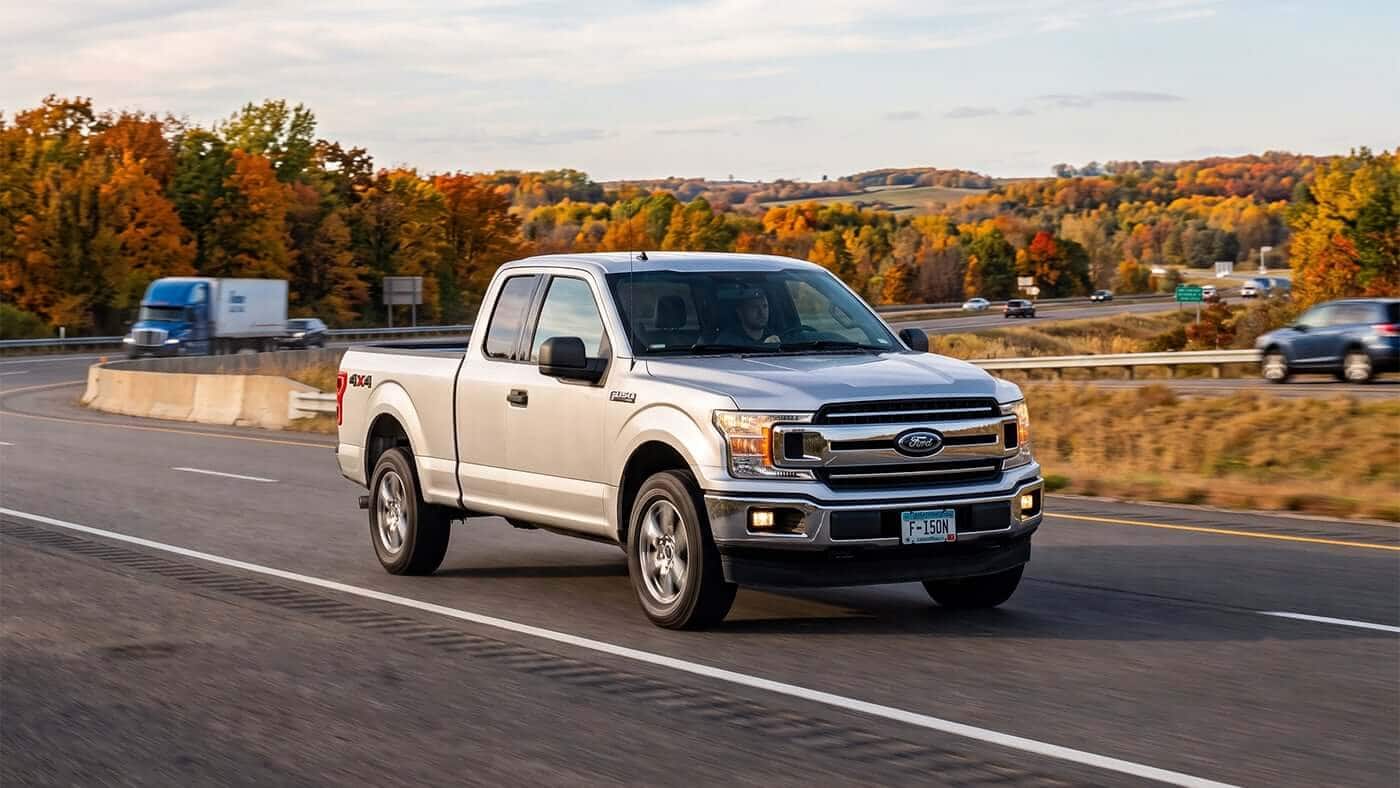

The Ford F-150 has been America's best-selling truck for over four decades, so the used market is flooded with options across multiple generations, engines, and price points. Not every model year ages the same way, and a few have quirks worth knowing before you commit thousands of dollars.
This guide ranks the strongest used F-150 years, flags the ones that cause headaches, and breaks down each generation.
CarSoup doesn't sell trucks directly. We pull listings from a nationwide network of dealers so you can compare years, trims, and prices side by side, then connect with the dealer holding the truck you want. You can browse used Ford listings on CarSoup to see what's available in your area across all of these years.
Table of Contents
Ford F-150 Years Ranked Best to Worst
Here's how recent model years stack up for used buyers, based on reliability data, owner reports, and resale demand.
2020 F-150: The last year of the 13th gen. Early bugs were sorted and the 10-speed automatic had matured. A strong all-around choice.
2018-2019 F-150: Mid-cycle refresh added an updated 3.3L base V6 and a diesel option. Solid drivetrains, widely available.
2014 F-150: Final year of the 12th gen before the aluminum body switch. The 5.0L V8 here is a known reliable workhorse.
2021-2022 F-150: Newest tech and the hybrid option, though first-year-of-generation buyers should check service history closely.
2015-2017 F-150: Generally good, but the first aluminum-body years and early 10-speed units had more reported issues.
2011-2013 F-150: The first EcoBoost years. Capable, but with more risk on high-mileage turbo examples.
Ford F-150 Years to Avoid
No F-150 is a guaranteed lemon, but a handful of years draw more complaints than others. If you're cross-shopping, keep these on a shorter leash.
2004-2008: The 11th generation 5.4L Triton V8 is notorious for spark plug problems. Early versions can break plugs on removal, and later three-valve engines had cam phaser rattle and timing issues. Repairs aren't cheap.
2010-2011 (first EcoBoost): The 3.5L EcoBoost launched strong but early units saw condensation-related stumbling and intercooler issues. Many were fixed under warranty, but unrepaired examples still circulate.
2015-2016: The debut of the aluminum body and a new platform brought transmission complaints and some electrical gremlins. The 2017 update and the 10-speed's later calibration improved things noticeably.
The pattern is consistent across the F-150 lineup: first-year-of-generation trucks carry more risk. A clean service history matters more than the model year alone, so always compare maintenance records when you shop used pickup trucks from different dealers.
Ford F-150 Generation Breakdown
Understanding which generation a truck belongs to tells you most of what you need to know about its engineering and reliability profile.
12th Generation (2009-2014)
The last steel-body run before Ford's big redesign. The 5.0L "Coyote" V8 introduced in 2011 is the standout here, prized for durability and simplicity. The 3.5L EcoBoost arrived in this generation too, delivering V8-like power with turbo punch.
13th Generation (2015-2020)
Ford switched to a military-grade aluminum body, cutting hundreds of pounds and improving fuel economy. The lineup added the 2.7L EcoBoost and, in 2018, a 3.0L Power Stroke diesel. By 2018-2020, this generation was mature and is the most recommended for value-focused buyers.
14th Generation (2021-present)
A ground-up redesign with available PowerBoost hybrid, an onboard generator (Pro Power Onboard), and a heavily upgraded interior. It's the most capable and tech-forward F-150, though prices reflect that.
What Should You Pay for a Used Ford F-150?
Used F-150 pricing swings widely based on year, trim, mileage, and engine. These are realistic ballpark ranges you'll see across dealer listings:
2011-2014 (12th gen): roughly $12,000-$22,000 depending on mileage and trim.
2015-2017 (early 13th gen): roughly $18,000-$28,000.
2018-2020 (late 13th gen): roughly $24,000-$38,000, with loaded Lariat and Platinum trims higher.
2021-2023 (14th gen): roughly $34,000-$55,000+, with hybrid and Raptor models commanding a premium.
Engine choice affects price and running cost. The 5.0L V8 is the simplest to maintain, the 2.7L EcoBoost balances economy and power, and the 3.5L EcoBoost delivers the strongest towing. Higher trims like Lariat, King Ranch, and Platinum cost more up front but hold value well.
Is a Ford F-150 Still Worth Buying?
For most truck shoppers, yes. The F-150's parts availability, nationwide service support, and deep used inventory make it one of the lowest-risk trucks to own, and strong resale means a well-kept example holds its worth better than many rivals.
It's still smart to cross-shop. Compare it against alternatives in our best used trucks. Buyers leaning toward midsize capability often look at the best years of Toyota Tacoma, while those wanting off-road character weigh the best years of Jeep Wrangler before settling on a full-size truck.
Whichever year you land on, CarSoup's role is to help you research and compare listings from multiple dealers in one place, then connect you to the seller. The final purchase always happens through the dealer holding the truck.
FAQs
What is the most reliable year of the Ford F-150?
The 2018-2020 model years are widely considered the most reliable recent F-150s, thanks to mature powertrains and a refined 10-speed automatic. Among older trucks, the 2014 5.0L V8 has an excellent long-term track record.
Is the EcoBoost or V8 better in a used F-150?
The 5.0L V8 is simpler and cheaper to maintain long-term. The 3.5L EcoBoost makes more torque and tows harder, while the 2.7L EcoBoost offers a good balance of power and fuel economy. Choose based on how you'll use the truck.
How many miles is too many for a used F-150?
A well-maintained F-150 can easily exceed 200,000 miles. Mileage matters less than service history. A 120,000-mile truck with full records is often a safer bet than a 70,000-mile one with gaps.
Which generation F-150 is the best value for the money?
The late 13th generation (2018-2020) tends to offer the best balance of price and reliability. By this point, Ford had ironed out the early aluminum-body issues and the 10-speed automatic was fully matured, so you're getting a dependable truck without paying 14th-generation prices. If your budget is tighter, the final years of the 12th generation, especially a 2014 with the 5.0L V8, are also worth a look since that engine has a strong long-term reliability record at a lower price point than newer trucks.
Does the F-150 hold its resale value well?
Yes, the F-150 is known for holding its value better than most full-size trucks. Strong nationwide demand, easy parts availability, and a deep used market all help keep resale prices stable. Higher trims like Lariat, King Ranch, and Platinum tend to depreciate more slowly than base trims, and trucks with documented maintenance records typically command a premium over similar-mileage examples with spotty service history.