
The Jeep Wrangler holds its value better than almost any vehicle on the used market, which is great news if you're selling and a challenge if you're shopping. Pay attention to the model year, though, and you can land a Wrangler that's mechanically sorted, genuinely capable off-road, and reasonable to live with day to day. This guide ranks the strongest years, flags the ones worth skipping, and walks through what each generation actually offers so you can browse listings with a clear target in mind.
CarSoup doesn't sell cars directly. We pull together Wrangler listings from dealers across the country so you can compare years, trims, and prices in one place, then connect with the dealer holding the vehicle you want. Use this article to narrow your search before you start clicking through used Jeep Wrangler listings.
Table of Contents
Quick Answer: The Best Jeep Wrangler Years
If you want the short version: the 2018-2020 JL Wranglers and the 2015-2017 JK Wranglers are the sweet spots for most buyers. The JL gives you modern tech, better fuel economy, and a much quieter ride, while the late JK offers proven reliability and lower used prices.
For purists chasing the classic Jeep experience on a budget, the 2006 TJ with the 4.0L inline-six is a legendary, simple, durable platform. The years most shoppers should approach carefully are the early JK models, especially the 2007 and 2012 Wranglers.
Jeep Wrangler Years Ranked Best to Worst
Here's a practical ranking based on reliability records, owner satisfaction, off-road ability, and what you actually pay on the used market.
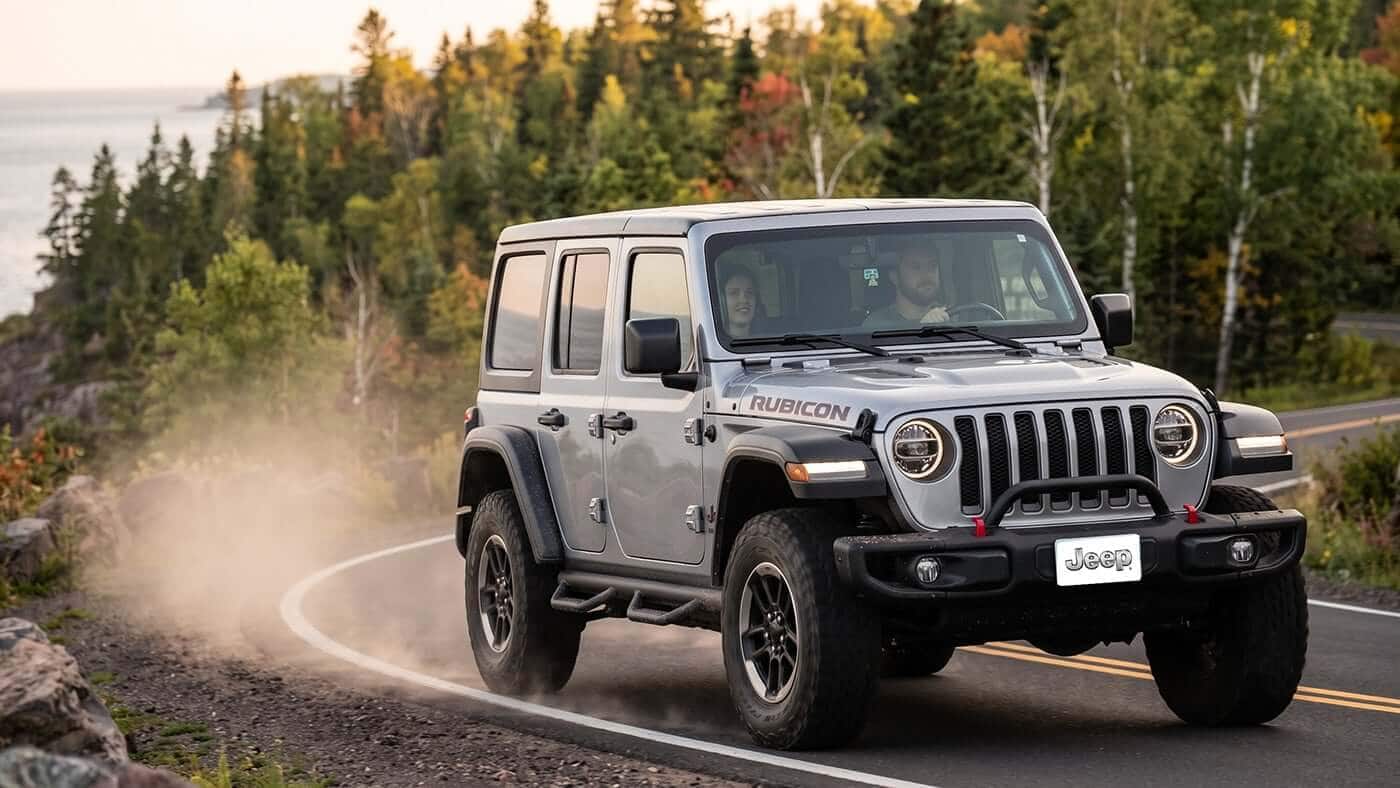
2018-2020 JL (Best overall): The current-generation Wrangler with the 3.6L Pentastar V6 or the 2.0L turbo four. Better on-road manners, available diesel, and far more refined interior. Early production quirks were mostly resolved by 2019.
2015-2017 JK (Best value): The most refined JK years after a decade of running improvements. The 3.6L Pentastar is dependable, and prices have softened enough to make these the smart-money pick.
2006 TJ (Best classic): The last and best TJ, with the bulletproof 4.0L six and a six-speed manual option. Simple to fix, endlessly modifiable, and still rugged.
2013-2014 JK (Solid): Pentastar V6 with most of the early-JK bugs ironed out. A reasonable middle-ground buy.
2008-2011 JK (Acceptable with caution): The 3.8L V6 here is underpowered and thirsty, but mechanically, the trucks are durable if maintained.
2007 and 2012 JK (Avoid): First-year build issues and the troublesome 3.8L-to-Pentastar transition year. More on these below.
Jeep Wrangler Years to Avoid
Every Wrangler generation had a weak year or two, and knowing them saves you from buying someone else's problem.
The 2007 JK was the first year of an all-new platform, and it shows. Owners reported electrical gremlins, TIPM (power module) failures, and early throttle-body issues. First-model-year Jeeps are usually the ones to skip, and 2007 is the clearest example.
The 2012 JK sits at an awkward crossover point. While it introduced the much-better 3.6L Pentastar, early Pentastar engines in 2012 had documented cylinder-head failures. If you're set on a 2012, confirm the head was replaced under the extended warranty or look at a 2013 instead.
Among older trucks, the 2005 TJ and certain early 2.4L four-cylinder TJ/YJ models are underpowered and less desirable. They run forever, but the driving experience leaves a lot on the table. When comparing options, a Wrangler's history report matters as much as the year, so check maintenance records before you commit.
Jeep Wrangler Generation Breakdown
TJ (1997 - 2006)
The TJ brought coil-spring suspension to the Wrangler, a huge upgrade in ride and articulation over the leaf-sprung YJ. The standout is the 4.0L inline-six, one of the most durable engines Jeep ever built, with many examples crossing 250,000 miles. TJs are simple, cheap to repair, and a favorite for off-road builds, though they're spartan inside and loud on the highway.
JK (2007 - 2018)
The JK was the first Wrangler offered as a four-door (the Unlimited), which transformed it into a usable family vehicle. Early JKs used a weak 3.8L V6; the 2012 switch to the 3.6L Pentastar fixed the power problem. The JK balances real off-road hardware, solid axles, removable doors and roof, with enough daily comfort to make it livable.
JL (2018 - Present)
The JL kept the trail-ready DNA but modernized everything around it: a quieter cabin, a better infotainment system, an available 3.0L EcoDiesel, and improved fuel economy. It drives more like a normal SUV on pavement while still tackling serious terrain. It's the choice if you want capability without sacrificing comfort.
What Should You Pay for a Used Jeep Wrangler?
Wranglers depreciate slowly, so expect to pay more than you would for a comparable SUV of the same age. These are generally used-market ranges; condition, mileage, trim (Rubicon and Sahara command premiums), and region all move the number.
TJ (2003-2006): roughly $9,000-$18,000, with clean low-mileage examples climbing higher.
JK two-door (2013-2017): roughly $16,000-$26,000.
JK Unlimited four-door (2015-2017): roughly $20,000-$32,000.
JL (2018-2020): roughly $28,000-$42,000, with Rubicon trims at the top end.
Because pricing swings so much by trim and condition, the fastest way to gauge a fair number is to compare several listings side by side. Browsing dealer inventory on CarSoup shows you what real Wranglers are actually listed for in your area, and you can filter by year and trim to match this guide.
Is a Jeep Wrangler Still Worth Buying?
For the right buyer, absolutely. No mainstream vehicle combines the Wrangler's off-road hardware, open-air driving, and resale strength. That slow depreciation means even a used purchase holds value well if you decide to sell later.
It's not for everyone, though. Wranglers ride firmly, use more fuel than a typical crossover, and the older ones are noisy at speed. If your priorities are quiet comfort and efficiency, a more conventional SUV may suit you better. If you want capability and character, few vehicles deliver like a well-chosen Wrangler. Shoppers cross-comparing rugged options often look at our best used SUVs, the best years of Toyota Tacoma breakdown, and the best years of Ford F-150 guide before deciding. You can also compare used pickup trucks if you're deciding whether trucks better suit your driving needs.
FAQs
Is the JK or JL Wrangler better?
The JL is more refined, more efficient, and better on-road, while the JK costs less used and has a longer track record. Choose the JL for daily comfort and the JK for value.
How many miles is too many on a used Wrangler?
Wranglers regularly pass 150,000-200,000 miles when maintained. High mileage matters less than service history and how hard the truck was used off-road, so always review records and inspect for trail damage.
Do Jeep Wranglers hold their value?
Yes. Wranglers have some of the lowest depreciation rates of any vehicle, which is why used prices stay high but resale stays strong when it's your turn to sell.
Is the 4.0L inline-six in the TJ Wrangler reliable?
Yes. The 4.0L inline-six used in TJ Wranglers is widely regarded as one of the most durable engines Jeep has built, with many examples surpassing 250,000 miles. It's a major reason the 2006 TJ remains a popular pick for buyers chasing a simple, classic Wrangler.
How much should I budget for maintenance on an older Wrangler like a TJ or early JK?
Older Wranglers are mechanically simple and generally inexpensive to repair compared to other SUVs, especially the TJ's 4.0L inline-six. That said, budget for wear items like axle seals, suspension bushings, and steering components if the vehicle has any off-road history, since trail use accelerates wear on those parts faster than daily commuting would.