Table of Contents
In the fast-moving world of electric vehicles, few stories are as surprising as that of the Chevrolet Bolt. It was a pioneer, a bestseller, a cautionary tale, and, as of 2023, a discontinued product. General Motors had officially pulled the plug on its affordable EV darling to focus on its new, larger, and more expensive Ultium-based vehicles like the Blazer EV and Equinox EV.
And yet, here in late 2025, the Bolt is the biggest story in the EV world once again.
In a stunning reversal, GM is bringing the Bolt back.1 A new, heavily updated 2027 model is set to begin production within months and will arrive in showrooms in early 2026.2 This isn't just a comeback; it's a strategic pivot that answers a desperate call from the market. The Bolt, it turns out, might be the most important EV in America precisely because it was the one GM tried to kill.
A Groundbreaking, Flawed Pioneer
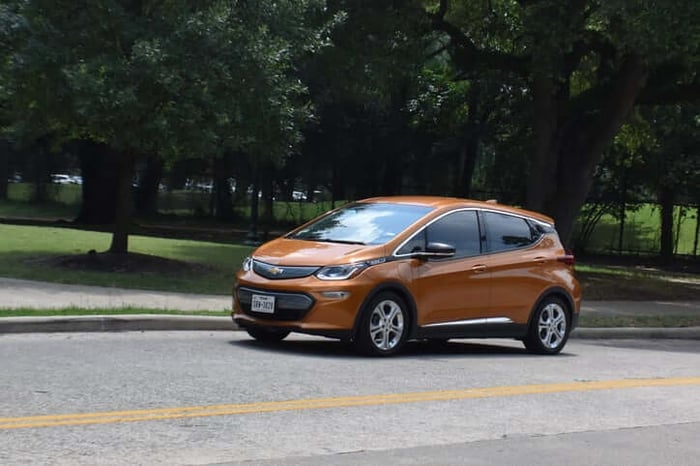
To understand the comeback, one must first appreciate the original. When the Bolt EV hatchback debuted in late 2016, it was a revolution. Long before the Tesla Model 3 was available to the masses, the Bolt offered an EPA-estimated 238 miles of range for under $40,000.3 It was the first time a legacy automaker proved that a long-range, affordable EV wasn't a futuristic dream but a present-day reality.
It quickly developed a fiercely loyal, almost cult-like following. Owners loved its zippy acceleration, practical hatchback design, and the simple joy of skipping the gas station. In 2022, GM expanded the lineup with the Bolt EUV, a slightly larger crossover version that added a few inches of rear legroom and the option for Super Cruise, GM's hands-free driving assistant.4
But the Bolt's legacy was tarnished. Its first-generation BEV2 platform was built around a battery chemistry supplied by LG that, in rare instances, posed a significant fire risk.5 This led to a massive, billion-dollar recall of virtually every Bolt ever made. Compounding this, the platform was notoriously unprofitable for GM.
Its biggest technological flaw, however, was its charging speed. Even as competitors like Hyundai and Kia launched EVs that could charge in under 20 minutes, the Bolt plodded along with a maximum DC fast-charging speed of around 50-55 kW, making road trips a test of patience.
By April 2023, the decision seemed final. The Bolt was old, expensive to build, and carried the baggage of a massive recall. GM needed its Orion, Michigan, assembly plant to build new electric trucks. The Bolt had served its purpose, and it was time to move on.
The Market's Verdict
GM's strategy was clear: move upmarket. The future was in the $45,000 Equinox EV, the $50,000-plus Blazer EV, and the $100,000 Hummer EV. But a funny thing happened: the market balked.
As interest rates and EV prices soared, the "affordable EV" segment that the Bolt had created was suddenly empty. Ford, Rivian, and Tesla were focusing on pricier trucks and SUVs. GM's own Equinox EV, billed as the affordable replacement, saw its cheapest models delayed. Consumers were left with a choice: stick with gas or pay a luxury premium for electric.
The outcry from Bolt fans and EV advocates was deafening. GM had just canceled the single best-selling, truly affordable, long-range EV in North America. Just months after the cancellation, GM CEO Mary Barra, citing overwhelming customer demand, announced the impossible: the Bolt would return.
The 2027 Bolt: Everything It Should Have Been
The vehicle arriving in 2026 is not a ground-up redesign. Instead, it’s a brilliant and pragmatic update. GM has taken the popular Chevrolet Bolt EUV body style (the smaller hatchback is gone) and fused it with its modern Ultium platform, fixing every major flaw of the original.
First, the battery. The old LG-supplied cells are gone, replaced by a new Lithium-Iron-Phosphate (LFP) battery pack.6 This chemistry is known for its lower cost, longer lifespan, and improved thermal safety, erasing the concerns of the past.
Second, and most critically, is the charging. The new Ultium-based Chevrolet Bolt will charge at speeds up to 150 kW.7 This is a game-changer, slashing the 10-80% charge time from nearly an hour to a highly competitive 26 minutes. GM also made another crucial decision: the 2027 Bolt will be one of the brand's first vehicles to feature a native NACS (Tesla-style) charging port, giving owners direct, adapter-free access to the vast Tesla Supercharger network.8
Inside, the tech gets a massive leap. The cabin will feature an 11.3-inch central infotainment screen and an 11-inch digital driver display, complete with Google Built-in.9 It will also offer Vehicle-to-Home (V2H) bidirectional charging, allowing the car to power a home during an outage.10
Despite these enormous upgrades, GM is holding the line on price. The 2027 Bolt is expected to start at $28,995.11
This resurrected Chevrolet Bolt, which GM says will be a "limited run," isn't just a car; it's an admission. It’s an admission that affordability matters, that customer loyalty is a powerful force, and that sometimes the best path forward is to perfect the product you already have. The EV that refused to die is back, and it may be the very car that saves the affordable EV market from itself.