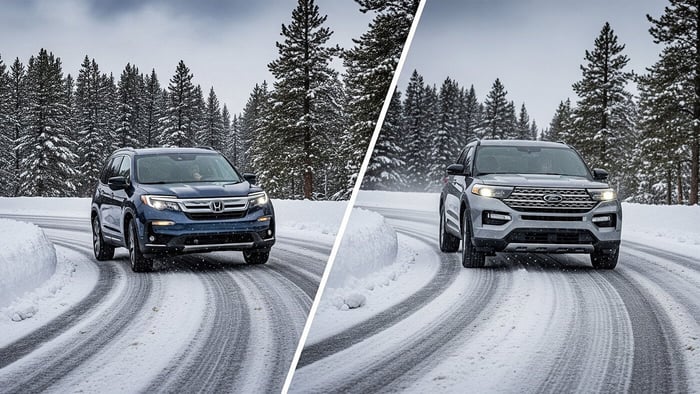

It’s 6 a.m. in January—pre-dawn flakes swirling, I-94 slick, hockey bags and car seats piled high. This is Minnesota. You need a 3-row that digs out of snowbanks, warms fast, and still swallows Costco runs. So which SUV handles Minnesota life better: the 2025 Honda Pilot or the 2025 Ford Explorer? We built this Minnesota-first guide to answer that with real winter priorities and local CarSoup know-how. Here’s why Minnesota changes your checklist.
Table of Contents
- Why Minnesota Changes Your SUV Checklist
- Why Generic Reviews Miss Minnesota
- Minnesota Stress Tests That Matter
- Your Minnesota-First Pilot Vs Explorer Snapshot, At A Glance
- Powertrains That Work In Minnesota Winters
- Safety And Driver Assist For Minnesota Winters
- Cabins That Fit Minnesota Families And Gear
- Towing And Weekend Trips
- Minnesota Ownership Costs And Winter Prep
- Which SUV Fits You? Three Minnesota Scenarios
- Shop Smarter On Carsoup: Your Minnesota-Ready Plan
- Minnesota-Ready Trims And Packages Checklist
- Our Minnesota Bottom Line
- Ready To Compare On Minnesota Roads?
- Design Details That Beat Minnesota Winters
- FAQs
Why Minnesota Changes Your SUV Checklist
So what exactly changes on your checklist in Minnesota? Polar vortex mornings, black ice, and months of road salt shift your SUV (sport-utility vehicle) priorities to AWD (all-wheel drive) tuning (how the system sends power on slick starts), real ground clearance for plow berms and potholes, and fast heat—wheel, seats, mirrors. Storage has to flex for car seats and hockey gear. And stability matters when you’re towing to the cabin in crosswinds.
From I-94 commutes to Brainerd Lakes runs and Highway 61 up the North Shore, winter is daily life, not a weekend event. You need door openings that work with bulky coats, second rows that slide for car seats, and a third row that doesn’t erase all cargo. Snow modes you’ll actually use. Headlights that cut through long, dark evenings. That’s the Minnesota lens we apply throughout this comparison.
If you’re still browsing, start with our SUVs for sale and use filters for AWD (all-wheel drive), heated steering/seats, and remote start. Dial in the winter gear first, then compare local trims and prices that fit your routine.
Why Generic Reviews Miss Minnesota
Spec sheets don’t show what happens when you exit I-35E into slush and the rear steps out. Or when you stop mid-slope on an icy Duluth hillside and need smooth, immediate traction, not wheelspin. On a Braemar Saturday with two car seats and mittens on, tiny touch targets and buried seat-heater controls become more than annoyances. Real winter reveals what brochures hide.
Paper doesn’t mention the Bloomington ramp snow berm that scrapes a low front bumper, or Uptown alleys rutted by packed ice. With the third row up and hockey sticks loaded, rear visibility shrinks—add a roof box and the hatch might not clear the garage. And cold mornings demand glove-friendly knobs and quick windshield defog, not menus three taps deep.
On paper, both list AWD and big wheels. In practice, wheel size affects winter tires—downsizing to 18-inch often unlocks better snow rubber and adds pothole cushion. AWD programming (how quickly power shifts) changes icy launches and hill climbs. Brake tuning matters on glaze ice—progressive pedals beat grabby ones. Hockey bags plus a roof box can block cameras and restrict liftgate travel, changing daily usability.
Minnesota Stress Tests That Matter
Think Highway 61 drift lines, Uptown alleys with plow ridges, and steep Duluth avenues after lake-effect squalls. This is where AWD logic, Snow mode (a drive setting that calms throttle and biases power to prevent spin), and approach angle (the nose’s ability to clear berms) decide outcomes. Heated wheel, windshield, and washer nozzles keep sensors and glass working when it’s ten below.
Add unplowed gravel in Wright County, crosswinds on I-35, and days of salty slush. Now ground clearance, underbody protection, headlight performance, and roof load ratings move from nice-to-have to need-to-have. For Pilot vs Explorer, compare Snow/terrain modes back-to-back, check whether you can fit smaller winter wheels, and note tow stability in gusts—these choices change your winter confidence.
Next, we condense these Minnesota must-haves into a quick, side-by-side Pilot vs Explorer snapshot so you can see, at a glance, which trims check the winter boxes.
Your Minnesota-First Pilot Vs Explorer Snapshot, At A Glance
Category | 2025 Honda Pilot (MN take) | 2025 Ford Explorer (MN take) | What it means in Minnesota |
Seating & Access | Up to eight seats; flexible second row on select trims | Typically seven; captain’s chairs common | Easier car-seat fits for hockey and school runs |
Cargo Flex | Boxy space; underfloor storage on some trims | Long floor; power-folding varies by trim | Squared space simplifies sticks, bags, cooler on rink days |
AWD (all-wheel drive) & Snow modes | Predictable family-friendly tuning; Snow/Sand modes by trim | Sportier RWD (rear-wheel drive)-based feel; drive modes vary | Tuning affects icy launches, crowned lanes; more on AWD feel next |
Ground Clearance | Generally generous for the class; trail-oriented trims improve angles | Varies by wheel/tire; watch low lips on sporty trims | Clears plow berms, frozen ruts, and cabin road heaves |
Heating & Visibility | Heated seats, wheel widely available; some windshield/washer heat | Heated seats/steering common; windshield heating varies | Key for subzero starts and pre-dawn rink drop-offs |
Towing Confidence | Stable manners; smooth V6 torque delivery | Strong with tow package; engine choice changes feel | Confidence towing small boats, sleds, or campers to Mille Lacs |
Tech & Controls | Logical layout; glove-friendly knobs on many trims | Big screens; knobs vs touch varies by trim | Glove-usable controls reduce distraction on I-94 commutes |
Safety & ADAS (driver-assistance tech) | Robust suite; tuning favors calm, family-friendly responses | Comprehensive features; availability and tuning vary by trim | Lane centering and adaptive cruise ease long I-35 drives |
Powertrains That Work In Minnesota Winters
That I‑35 calm also depends on how the powertrain behaves when it’s slick. We see the difference on snowy ramps: Pilot runs a smooth V6 (six‑cylinder) with a 10‑speed automatic, giving predictable launches and gentle mid‑corner corrections. Explorer’s turbo 4‑cylinder or turbo V6 pair with a RWD (rear‑wheel drive) layout that feels sportier, but can ask more of the AWD (all‑wheel drive) system when you add throttle mid‑turn. Climbing a plowed grade with a small trailer, both pull well; Explorer’s turbo torque arrives earlier.
On icy Minneapolis intersections, smooth traction handoffs (the moment AWD shifts power front to rear) prevent the twitch you feel in the wheel. Pilot’s front‑biased system stays calm if you breathe on the gas; Explorer’s RWD roots reward steady inputs and can rotate the rear if you stab the throttle. For grade pulls to Lutsen with a sled, use Snow/Tow modes (drive settings that soften throttle and shifting). Pro tip: 18‑inch wheels and true winter tires beat bigger wheels.
Want a reality check on power and price? Cross‑shop a listing like the 2023 Used Ford Explorer Limited Sport Utility 4D to benchmark turbo torque, tow ratings, and option content against a similarly equipped Pilot. It’s a handy yardstick as you browse Minnesota inventory. Next up: how safety tech behaves in snow.
Safety And Driver Assist For Minnesota Winters
So, about how safety tech behaves in snow: both Pilot and Explorer offer adaptive cruise control (keeps a set gap) and lane centering on many trims. Blind-spot monitoring with trailer coverage and available 360-degree cameras help on windy prairie stretches when slush coats side glass. Availability is ADAS (advanced driver-assistance systems) package-dependent, so expect differences by trim and year.
Now, the catch is sensor placement and cleaning. Radar behind the grille emblem and cameras at the windshield can ice up; some trims add heated windshield zones or washer nozzles to help. Keep a soft cloth handy for parking sensors, and lean on the 360 camera to nose around snowbanks. Again, feature availability varies by trim and options.
Use this as a shopping reference: Used 2023 Ford Explorer XLT Sport Utility 4D. Scan photos/specs for adaptive cruise, lane centering, blind-spot with trailer, 360 camera, tow package, and trailer-sway control.
Cabins That Fit Minnesota Families And Gear
While you’re scanning photos and specs, shift your eye to the everyday stuff—getting kids in and gear loaded. Wide door openings and taller step‑in make boots easier; check LATCH (Lower Anchors and Tethers for Children) access and buckle room with winter coats. Pilot’s trick stowable center seat (in some trims) lets you run 8‑across or captain’s chairs on demand; Explorer commonly comes with fixed captain’s chairs for easy third‑row walk‑through. Compare cargo floor shape and height—flatter floors and lower liftover make Costco boxes and hockey bags simpler.
Look for cargo hooks that actually hold hockey bags, four tie‑downs, and underfloor wells for straps, jump pack, and blankets. Test liftgate clearance with a roof box and a snow berm behind—some hatches stop short or hit the box. Hands‑free tailgate sensors are great with gloves; make sure the sensor still works through slush. Rear wiper sweep and defroster coverage matter on dark school runs. If you haul strollers and a cooler, measure depth with the third row up; those inches matter, and next we’ll cover towing and weekend trips.
Want a real‑world view? Open the photo gallery on the 2023 Used Ford Explorer Limited Sport Utility 4D and note captain’s chairs, pass‑through width, and floor height. Limited vs Timberline/ST can change third‑row mechanisms, spare location, and usable cargo depth—seat choices shift volume in practice.
Towing And Weekend Trips
Since seat choices shift cargo, plan your tow setup likewise. Small boats to Mille Lacs? Get the factory tow package (hitch, 7‑pin (trailer plug), upgraded cooling). Pop‑up to Itasca? Add a brake controller (powers trailer brakes) and confirm trailer‑sway control (stability aid). Roof box to BWCA (Boundary Waters Canoe Area)? Mind roof load and crosswind stability. Tow/360 cameras help backing at ramps; some trims include them, some don’t. Keep tongue weight at 10‑15% and verify payload. Next: winter costs.
Comparing for family outside Minnesota too? We serve multiple markets—if you’re checking inventory near D.C., browse SUV cars for sale in Ashburn, VA to see which trims include tow wiring, brake‑controller readiness, and roof‑load ratings. The checklist stays the same; availability changes by region.
Minnesota Ownership Costs And Winter Prep
That same checklist matters to your wallet—before you buy, we suggest budgeting for these Minnesota winter realities so your Pilot or Explorer feels safe in January and still affordable in July.
Winter tires: True winters stop shorter on ice; budget $900–$1,600 for tires, $1,200–$2,000 with wheels and TPMS (tire-pressure sensors).
Salt protection: Do regular underbody washes; add ceramic coating or rustproofing ($200–$800) to slow corrosion and protect brake lines, fasteners, and paint.
Remote start & heat: Factory systems integrate best; dealer add-ons $300–$700. Pair heated wheel and seats; test battery—subzero starts punish weak cells.
Insurance & tabs: Three-row SUVs often cost more; compare trims with ADAS (safety tech), immobilizer, VIN etching. Check registration fees by weight.
Fuel & maintenance: Expect 15–30% mpg drop in cold; budget for AWD (all-wheel drive) fluid services, wipers, and brake inspections after winter.
Which SUV Fits You? Three Minnesota Scenarios
You just saw the winter costs; now let’s apply it to real life. Three quick scenarios, clear picks, and why. Then we’ll show you how to find the right build nearby.
Twin Cities Carpool Captain: Tight school lines favor Pilot’s big windows and simple controls; Explorer’s 360 camera helps, but Pilot EX-L usually feels easier to park and load.
Duluth Snowbelt Driver: Duluth’s icy hills reward smooth traction; Pilot TrailSport with Snow mode and smaller wheels feels planted. Explorer Timberline adds grip and clearance for careful climbs.
Rochester Highway Commuter: Long I-90/I-35 stretches highlight lane centering and seats; Pilot’s quieter cabin and cushier ride soothe, while Explorer’s punch and driver-assist tuning suit brisk freeway pace.
Side note: if someone in your household wants a thrifty commuter alongside the SUV, cross-shop a New 2026 Honda Civic. It sips fuel, parks anywhere, and keeps winter miles off your family hauler.
Shop Smarter On Carsoup: Your Minnesota-Ready Plan
Keeping one do‑it‑all SUV or adding a thrifty commuter, the next step is finding the right build fast—use our five-step CarSoup workflow, then we’ll show the trims and packages to target. No guesswork.
Step 1: Filter for winter: Select AWD (all-wheel drive), heated seats and wheel, remote start, roof rails. Sort by distance to Twin Cities, Duluth, or Rochester.
Step 2: Inspect the photos: Check tire size, tow receiver, spare type, and floor height. Scan sticker for Snow/Slippery modes and heated windshield or wiper de-icer.
Step 3: Compare trims: Line up Pilot vs Explorer packages side by side. Save favorites to a shortlist and note wheel size for winter tire fit.
Step 4: Ask Soupy AI: Use our assistant (AI, artificial intelligence) to explain trims in plain English, flag missing features, and suggest nearby matches.
Step 5: Set alerts and book drives: Schedule back-to-back test drives, enable price-drop alerts, and bring car seats to test fit and Snow mode.
Helping family outside Minnesota? We serve nationwide, too. If you’re browsing for someone in Virginia, scan cars for sale in Ashburn, VA (Virginia) and apply the same winter-first checklist—filters, photo inspection, Soupy AI, and alerts—so you compare apples to apples.
Minnesota-Ready Trims And Packages Checklist
You set filters and alerts; now we’ll lock the features that matter here. These picks boost comfort, traction, and resale—heated wheel at -10°F, Snow mode for Duluth hills.
Feature to Prioritize | Why It Matters in Minnesota | What to Verify Before Buying |
Heated steering wheel and front/rear seats | Warms hands fast on subzero starts; keeps kids comfy on school runs | Test activation speed; confirm second-row heat and settings memory |
Remote start (OEM, factory installed) | Pre-heats cabin and defrosts glass without extra fobs or glitches | Works with climate presets; include rear defrost and heated mirrors |
All-weather mats and cargo liners | Traps slush, sand, and salt; protects carpet and resale | Full coverage for front, second, and third rows plus cargo |
Snow or Slippery drive mode | Softer throttle and smarter traction on icy launches and hills | Mode available on your trim; confirm activation steps and indicator |
Factory tow package with wiring and cooling | Safer towing for boats or sleds; maintains temps on summer climbs | Hitch class, 7-pin wiring, trailer-sway control, and payload sticker |
Roof rails and crossbars | Carry skis or box; free cargo space for strollers and bags | Static and dynamic weight limits; box and garage clearance |
Our Minnesota Bottom Line
With roof‑box clearance and weight limits in mind, here’s our Minnesota bottom line. Pick the Honda Pilot if you want roomier, boxier cargo, calmer winter manners, and family‑friendly controls that feel easy at 6 a.m. Choose the Ford Explorer if you prefer sportier dynamics, turbo torque, and a rear‑drive (power to the back wheels) feel that’s fun but asks for steadier inputs on ice. To decide, do back‑to‑back test drives on the same day and route—your I‑94 commute, a slushy side street, and a highway merge. Bring car seats and a loaded hockey bag.
Visibility and cargo shape can be the tie‑breakers. In the dark, compare headlights, wiper coverage, and defog speed in a cold start—those minutes matter. Load the third row, then check if two hockey bags or a stroller plus cooler still fit. Try Snow mode (softens throttle) on a safe, empty stretch and see which SUV feels calmer. Finally, practice with gloves: heater buttons, camera washers, liftgate height with a roof box, and spare‑tire access in slush. Small details, big daily wins.
Shopping for someone outside Minnesota? Share Honda for sale in Ashburn, VA, and pass along our winter‑first checklist—AWD, heated wheel, tow package, smaller wheels—so they buy confidently for their roads.
Ready To Compare On Minnesota Roads?
Shared our checklist with out‑of‑state family? Great—now let’s get you driving. Browse local Pilot and Explorer inventory, ask Soupy AI for a winter‑smart build, and book back‑to‑back test drives in the Twin Cities or Duluth. Try Snow mode, load a hockey bag, and feel the difference today.
Helping family elsewhere? Point them to Ford cars for sale in Ashburn, VA, and a broader search like SUVs for sale in Ashburn, VA, so they can compare trims, set alerts, and schedule test drives near them.
Design Details That Beat Minnesota Winters
Before you head to those back-to-back test drives, look at the exterior details that actually save you time in snow. Bright, well-aimed LED (light-emitting diode) headlights with a clean cutoff punch farther on dark I-94, while low-mounted, warm-white fogs help reduce whiteout glare. Heated side mirrors and quick-clearing tailgate shapes (less lip to trap slush) keep vision clean. Watch sporty trims with low front lips—they scoop slush and cut approach angle, making plow piles tougher. Planning a ski box? Confirm factory roof-rail compatibility and dynamic load rating, and bring the crossbar spacing you need. Last, verify a windshield wiper de-icer or heated zone at the base; it frees stuck blades fast at ten below. Small checks, big wins.
Now, think about snow shedding and salt. Wider wheel-arch clearance and proper splash guards keep packed ice from rubbing tires, and thicker lower cladding takes sandblasting better. Choose colors that hide salt—silver and gray show streaks less than black. Rear wiper sweep and a strong washer matter when you’ve got a roof box shadowing the glass; camera washers are a bonus. Measure height with a box installed—most garages are about 84 inches; many SUVs gain 15–18 inches with a medium box. Check for front skid or airflow panels that won’t snag ice chunks, and make sure tow-hook access isn’t buried. Quick test: with gloves on, can you pop the hatch, clear snow, and go?
FAQs
What are the main differences in All-Wheel Drive (AWD) feel and winter handling between the 2025 Honda Pilot and the 2025 Ford Explorer?
The Pilot features a smooth V6 with a front-biased AWD system, providing predictable launches and gentle corrections, leading to calmer winter manners. The Explorer runs a turbo engine with a Rear-Wheel Drive (RWD)-based layout that feels sportier, but it may require steadier throttle inputs on ice to prevent the rear from rotating
What critical features are most important for Minnesota winter readiness?
Priorities shift to AWD tuning (how power is sent on slick starts), real ground clearance to clear plow berms and potholes, and fast heat features, including a heated steering wheel, seats, and mirrors. Snow or Slippery drive mode is also essential as it calms the throttle and biases power to prevent wheel spin.
How does the choice of SUV impact different driving scenarios in Minnesota?
- Twin Cities Carpool Captain: The Pilot is favored for its simple controls and big windows, making it easier to park and load in tight school lines
- Duluth Snowbelt Driver: The Pilot TrailSport with Snow mode and smaller wheels feels planted and rewards smooth traction on icy hills
- Rochester Highway Commuter: The Pilot's quieter cabin and cushier ride soothe long I-90/I-35 stretches, while the Explorer's punchy engine and driver-assist tuning suit a brisk freeway pace.
What is the impact of wheel size on winter driving, and what is recommended?
Large wheels can impact the availability of winter tires. Downsizing to 18-inch wheels often unlocks better snow rubber and provides more cushion for potholes.
How do the two SUVs compare in terms of seating and cargo flexibility for families?
The Honda Pilot seats up to eight, has a flexible second row (including a trick stowable center seat on some trims), and provides a boxier cargo space with underfloor storage. The Ford Explorer typically seats seven, commonly featuring fixed captain’s chairs for an easy third-row walk-through, and has a long, flatter cargo floor.
What are the recommended costs to budget for Minnesota winter ownership?
It is suggested to budget for:
- Winter tires: $900–$1,600 for tires alone, or $1,200–$2,000 with wheels and TPMS
- Salt protection: $200–$800 for ceramic coating or rustproofing to slow corrosion
- Remote start: Factory systems integrate best, but dealer add-ons cost $300–$700
- Fuel: Expect a 15–30% drop in miles per gallon (mpg) due to cold weather